About this data
Data comes from NASA DONKI (Database Of Notifications, Knowledge, Information) and the NOAA Space Weather Prediction Centre. DONKI tracks coronal mass ejections, solar flares, and geomagnetic storms in real time. This site uses that data to calculate CME arrival predictions and Kp forecasts.
Visit NASA DONKI →Northern lights
forecast tonight
Live geomagnetic storm data, Kp index, and upcoming solar events. Everything you need to know whether the aurora will be visible from your location.
Can you see it from where you are?
Share your location and we'll tell you tonight's odds for your exact spot: the Kp you need, whether the sky is dark enough, and the cloud forecast.
Use your location or search a town above to see tonight's personal forecast.
What the sun is doing right now
The same trusted NASA & NOAA data - now a little friendlier to read.
Where this forecast comes from
Forecast updates every 30 minutes · solar wind every minute.
Low activity expected. Solar conditions are currently quiet. Chances of aurora visibility are low tonight.

Nanuq says: Quiet right now. A good night to check your gear and watch for the next alert.
Solar wind · live
DSCOVR satellite-
Incoming solar events
Earth-directed CMEs with predicted arrival times.
No Earth-directed CMEs detected in the next 7 days.
Recent solar flares
M and X class flares from the past 7 days. X-class are the strongest.
Peak time (UTC)
Peak time (UTC)
Peak time (UTC)
X-class flares are the most powerful solar events and frequently trigger CMEs that cause aurora.
The week ahead
Predicted peak Kp each night, from NOAA's 3-day forecast and the 27-day solar-recurrence model.
Pick a place under the lights
400+ locations with their own live forecast. Here's where aurora is within reach right now.






Find your Kp threshold
The aurora reaches further from the poles as the storm gets stronger. Jump to every location that comes into range at each level.
Compare destinations tonight
Search any of 400+ countries and towns and stack them up by tonight's odds, cloud cover and threshold.
Up to 8 locations
Where the lights are right now
NOAA's OVATION model, updated every few minutes - the glowing oval is live auroral activity over the pole.
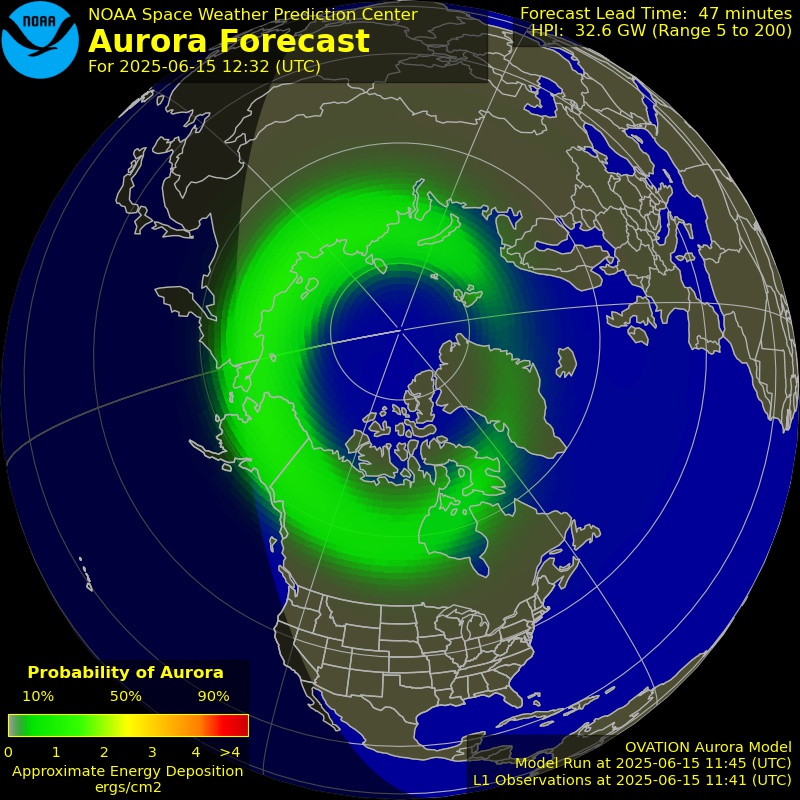 Forecast · updating… LIVE · NOAA
 The aurora oval, live from space
This is the band of sky where aurora is glowing this very moment. When the oval swells and pushes south, the lights come within reach of more places.
Nanuq says: if the oval's edge dips over your country, head out and look north - you're in the zone tonight.
The aurora, photographed from space
Recent aurora imagery captured by astronauts aboard the International Space Station, via NASA's public image library.
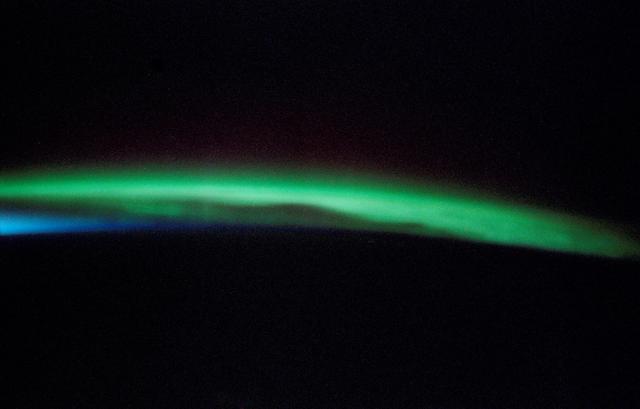
View of Aurora near Earth's limb taken during Expedition Six
NASA / ISS Crew Earth Observations
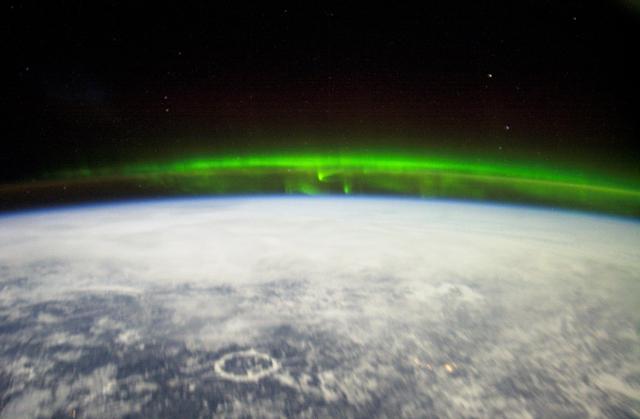
Crew Earth Observations (CEO) of the Aurora Borealis and city lights taken during Expedition Six
NASA / ISS Crew Earth Observations
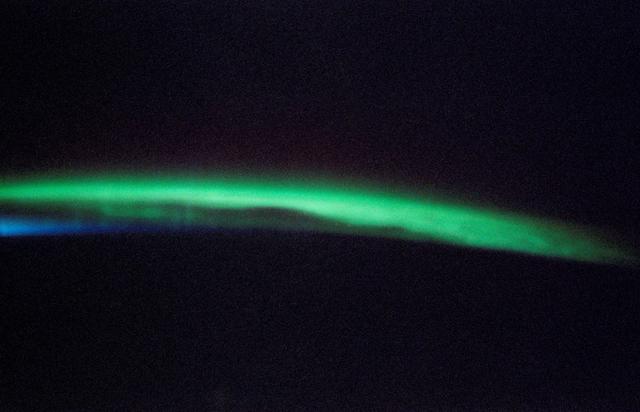
View of Aurora near Earth's limb taken during Expedition Six
NASA / ISS Crew Earth Observations
Imagery courtesy of NASA / ISS Crew Earth Observations. NASA does not endorse Aurora Tonight.
Four things that make or break a sighting
Dark skies
Get away from city light pollution. Rural areas, coastlines, and hilltops are best. Even small towns reduce visibility significantly.
Clear skies
Cloud cover is the biggest obstacle. Check a local weather forecast. Even a partially clear night can give good windows.
Face north
Stand with your back to the south and face the northern horizon. The aurora usually starts low on the horizon as a green glow.
Right time
Peak aurora hours are between 10 pm and 2 am local time, when magnetic midnight aligns with solar midnight at your longitude.
Northern lights, answered
Everything you need to know about the aurora and how to see it.