Northern lights in USA tonight
Aurora borealis over Fairbanks, Alaska - 65°N magnetic latitude inside the auroral oval, Kp 1 threshold, comparable to Tromsø.
How the sky looks right now
Live Kp index from NASA & NOAA, mapped to what it means across USA.
Low activity expected. Solar conditions are currently quiet. Chances of aurora visibility are low tonight.
How far south the glow reaches
At Kp 1, the auroral oval pushes down to ~76°N - covering every USA town below.
7-day outlook for USA
Predicted peak Kp each night, from NOAA's 3-day forecast and the 27-day solar-recurrence model.
Forecasts beyond 3 days are lower confidence - check back nightly as the outlook firms up.
Aurora visibility by town
Each spot lights up at a different Kp threshold thanks to its latitude. It comes down to the clouds.
Alaska
65°NAlaska hub – Fairbanks (Kp 1) and Anchorage (Kp 2) overview
Fairbanks
65°NAlaska – auroral oval, Kp 1 from Cleary Summit
Anchorage
61°NAlaska – Kp 2 from the Chugach Range
North Dakota
55°NTheodore Roosevelt NP Dark Sky Park, flat prairie horizon
Minnesota
56°NBoundary Waters – best dark sky in the lower 48 north
Wisconsin
56°NApostle Islands – Lake Superior north-facing shore
Michigan
55°NUpper Peninsula – dark sky on Lake Superior
Montana
55°NGlacier NP – Rocky Mountain aurora
Wyoming
51°NYellowstone Lamar Valley and Grand Teton at 2000 m
Idaho
50°NCraters of the Moon Dark Sky Park, Lake Pend Oreille
Vermont
52°NNortheast Kingdom – Bortle 2-3 near Quebec border
New Hampshire
52°NCoos County – Connecticut Lakes near Quebec, Bortle 2
Maine
51°NAcadia NP – dark sky New England coast
Washington
54°NOkanogan Highlands and North Cascades – Cascade rain shadow
Oregon
49°NAlvord Desert Bortle 1-2, Crater Lake Dark Sky Park
Great Falls
54°NNorth-central Montana – 56° magnetic, Missouri River plains
Duluth
55°NLake Superior north shore – Hawk Ridge and Canal Park lakefront
Whitefish
55°NGlacier NP gateway – Lake McDonald and Going-to-the-Sun Road
Marquette
55°NUpper Peninsula – Presque Isle and Black Rocks on Lake Superior
Keweenaw
57°NUpper Peninsula – Brockway Mountain and Copper Harbor on Lake Superior
Minneapolis
55°NTwin Cities – Boundary Waters 4 hrs north, Mille Lacs 2 hrs
Seattle
54°NPacific Northwest – Hurricane Ridge and eastern Cascades
Bozeman
54°NGallatin Valley – Hyalite Canyon and Yellowstone gateway
Burlington
53°NLake Champlain – Vermont's largest city, Northeast Kingdom 90 min north
Portland (Maine)
51°NMaine coast – Cape Elizabeth and Acadia NP 3 hrs north
Portland (Oregon)
50°NOregon – Rowena Crest and Columbia River Gorge
Colorado
48°NGreat Sand Dunes NP – International Dark Sky Park at 2340 m
Utah
48°NBryce Canyon and Natural Bridges – three International Dark Sky Parks
Nebraska
50°NSandhills – Bortle 2 over vast area, Kp 6 threshold
Massachusetts
50°NMount Greylock and Cape Cod – New England dark sky
New York
52°NAdirondacks interior – Bortle 2, largest wilderness east of Mississippi
Glacier NP
55°NMontana – 56°N magnetic, Kp 5 threshold, same as Tromsø
Kansas
47°NCimarron Grassland – flat prairie horizon, Bortle 2
Kentucky
48°NLand Between the Lakes – lake peninsula, Kp 6-7 from dark sky
North Carolina
45°NBlue Ridge Parkway – Waterrock Knob 1934 m, Kp 7 from ridge
Georgia
43°NBlue Ridge mountains – Kp 7 from northern GA dark sky
Arkansas
44°NOzarks – Buffalo National River, Bortle 2, Kp 7
Washington DC
47°NDC metro – Shenandoah NP 80 miles, Kp 6-7 from dark sky
Ohio
49°NHocking Hills and Wayne NF – Kp 6 threshold, Lake Erie horizon
Indiana
49°NIndiana Dunes NP and Hoosier NF – Great Lakes and forest dark sky
California
43°NLassen Volcanic NP and Point Arena – Kp 7 from northern CA dark sky
Illinois
51°NNachusa Grasslands and Shawnee NF – Kp 5-6 from northern IL
Maryland
48°NGarrett County and Assateague Island – dark sky, Kp 6-7
Texas
42°NMcDonald Observatory Bortle 1 and Big Bend NP – Kp 7-8
Pennsylvania
49°NCherry Springs SP Bortle 1 – Kp 6, best dark sky in the east
Virginia
46°NGrayson Highlands 1700 m and Shenandoah NP – Kp 6-7
New Jersey
49°NPine Barrens and High Point SP – Kp 6 from NJ dark sky
Oklahoma
44°NWichita Mountains and Black Mesa Panhandle – Kp 7
Iowa
51°NYellow River SF and Loess Hills – Kp 6, Driftless dark sky
Arizona
40°NKitt Peak Bortle 1 and Flagstaff Dark Sky City – Kp 7-8
Tennessee
46°NRoan Mountain 1916 m and Big South Fork – Kp 6-7
Alabama
43°NLittle River Canyon and Bankhead NF – Kp 7, rare events
Missouri
48°NOzark Riverways Bortle 2 – Kp 6 from Current River corridor
Denali the moose's tip: Alaska sits under the auroral oval - Fairbanks at 65° N sees aurora overhead on Kp 2-3 nights. The lower 48 needs G3 or stronger to see anything significant, with the northern states like Montana, Minnesota, and Maine the most realistic targets on G2 nights. Alaska's interior stays drier and clearer than the coast, which is why Fairbanks has become the main aurora-watching destination.
Three ways to do it
Fairbanks
Alaska auroral oval - aurora on almost any clear night in winter, comparable to Tromsø
Threshold · Kp 1Wyoming
Yellowstone Lamar Valley and Grand Teton at 2,000 m - dramatic mountain foreground
Threshold · Kp 5-6Minnesota
Boundary Waters Canoe Area - largest wilderness east of the Rockies, Bortle 1-2
Threshold · Kp 4Why the USA stands out
Alaska is in a separate category from the rest of the USA. Fairbanks at ~65° and Anchorage at ~61° magnetic latitude see aurora at the same Kp levels as Scandinavia. The Fairbanks aurora lodge industry - led by operators like Borealis Basecamp and Chena Hot Springs Resort - has grown substantially in the past decade as international aurora tourism expanded beyond Scandinavia.
In the continental USA, the northern tier sees aurora during geomagnetic storms. North Dakota at 55°N magnetic latitude has one of the lower thresholds in the lower 48, and the flat prairie gives unobstructed northern horizons. Minnesota's Boundary Waters and Michigan's Upper Peninsula have the darkest skies at 55–56°N. Wisconsin's Apostle Islands give open water horizon on Lake Superior's south shore.
The mountain west states have a practical advantage: high elevation reduces atmospheric absorption, and the Great Basin and Cascade rain shadow give clear skies more frequently than equivalent eastern latitudes. Montana's Glacier National Park, Wyoming's Yellowstone, Idaho's Craters of the Moon, and Oregon's Alvord Desert are among the darkest large-area sky platforms in the country. Vermont and New Hampshire in New England sit at 52°N magnetic with some of the darkest sky east of the Mississippi.
Compare USA locations tonight
Pre-filled with USA's top spots - search 400+ locations worldwide to compare any of them side by side.
Up to 8 locations
How often does the aurora appear in USA?
Average nights per month the Kp reached Fairbanks's threshold, from 15 years of geomagnetic data (2010–2024).
Based on geomagnetic data 2010–2024 for Fairbanks, Alaska at 65°N. The lower 48 states need G2+ storms for visible aurora - Fairbanks sees aurora on almost any clear night in winter.
Plan your trip to USA
Best window for Alaska
September for the best balance of darkness, activity, and manageable cold. October and March for the equinox geomagnetic peaks. The Fairbanks aurora lodges typically operate October–March; book well in advance for mid-winter dates.
Lower 48 strategy
Set NOAA G-storm alerts and drive to a dark sky site when Kp 4+ is forecast. Minnesota's Boundary Waters, Michigan UP, Montana's Glacier NP, and Vermont's Northeast Kingdom are the best platforms. Most sightings happen with less than 6 hours of notice.
Related pages
Aurora Locations Worldwide
Global hub for all aurora forecast regions.
Read →Northern Lights Fairbanks Tonight
Fairbanks - Alaska's aurora capital inside the auroral oval.
Read →Northern Lights Minnesota Tonight
Minnesota - Boundary Waters dark sky, best in lower 48.
Read →Northern Lights Canada
Yellowknife and Churchill - North America's other aurora capitals.
Read →What Is the Kp Index?
How Kp determines aurora visibility across US latitudes.
Read →How to Plan a Northern Lights Trip
Complete planning guide - destination, timing, packing, and expectations.
Read →Aurora photographs from USA
Real photos sourced from Wikimedia Commons.
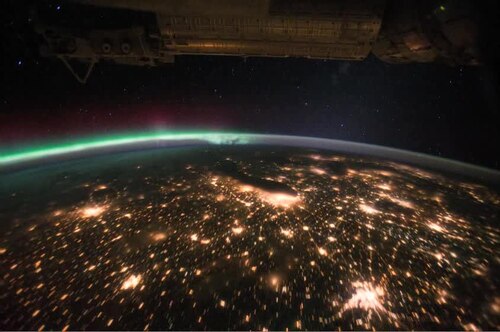 Aurora Borealis Pass over the United States at Night
 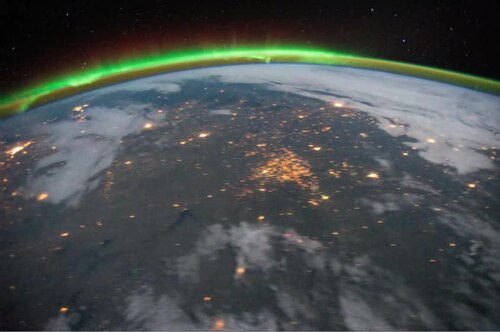 Aurora Borealis and eastern United States at Night
 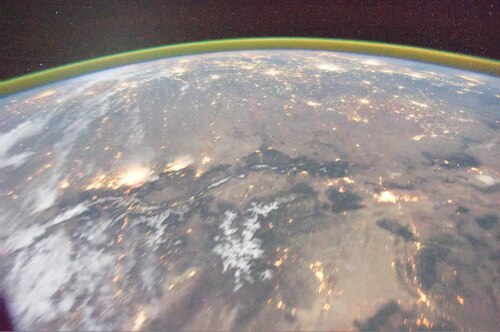 Aurora Borealis and the United States at Night
 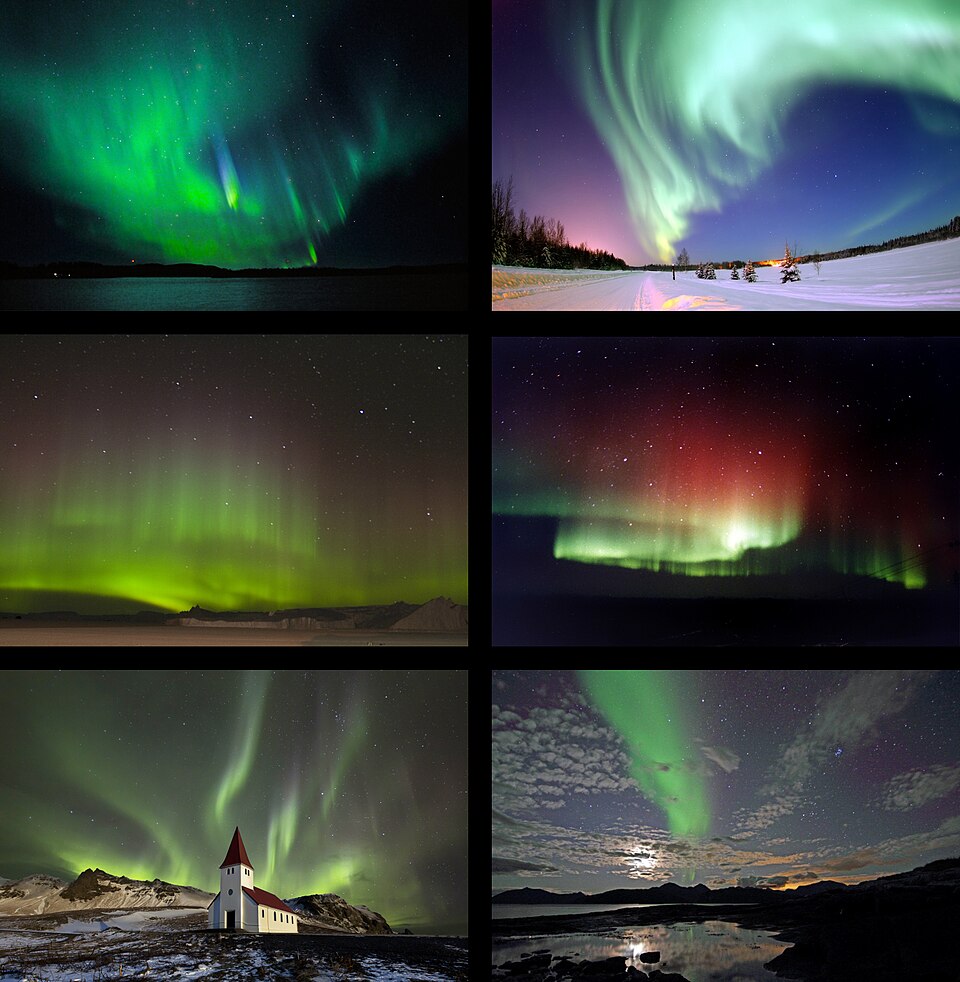 Aurora Borealis and Australis Poster
  Northern Lights Over Southern Michigan (Pink)
  Northern Lights Over Southern Michigan (Green and Pink)
 Guides for visiting USA
In-depth planning resources for your northern lights trip.
 Travel guide Planning
 How to Plan a Northern Lights Trip
Complete guide to timing, destination choice, packing, and realistic expectations.
 Science Science
 What Is the Kp Index?
How Kp determines aurora visibility across US latitudes from Alaska to the lower 48.
 Travel guide Tours
 Best Northern Lights Tours 2025
Curated aurora tours including Fairbanks lodge packages and lower-48 dark sky destinations.
 Travel guide Cruises
 Northern Lights Cruise - Is It Worth It?
Weighing aurora cruise versus land-based options - including Alaska Inside Passage routes.