Every place we forecast
All aurora locations worldwide
Live Kp thresholds, dark-sky sites, and best-season guides for every major aurora destination across both hemispheres.
Explore the interactive mapNorthern hemisphere
Prime northern lights destinations
 Kp 2–7+
 From Shetland at the Kp 2 threshold down to London requiring Kp 6+, the UK spans a huge range of aurora probability. Scotland - especially the Northern Isles and Highland coast - is the priority destination. Galloway Forest and Northumberland (Kielder) are the best dark sky parks for England.
 Kp 2–5
 Shetland at 59°N needs Kp 2 - one of Europe's most accessible aurora locations. Orkney needs Kp 3. The Highland mainland - Torridon, Assynt, Glen Affric - reaches Bortle Class 2 with a Kp 3-4 threshold. Edinburgh and Glasgow need Kp 4 from dark sites. Galloway Forest Dark Sky Park in the south holds a Gold Tier IDA designation.
 Kp 1–5
 Norway spans more aurora-relevant latitude than any other accessible European country. Tromsø is the global benchmark for guided aurora tourism. Svalbard at 78°N is inside the auroral oval. The Lofoten Islands - Reine, Svolvær, Leknes, Henningsvær - combine a Kp 2 threshold with outstanding scenery. Inland Kautokeino on the Finnmarksvidda plateau has more clear nights than the coast and Bortle Class 1 sky.
 Kp 2–3
 Iceland sits at 64–67°N magnetic latitude with no urban sprawl outside Reykjavik. Kp 2–3 is enough for aurora from most of the island. The south coast glacial lagoon at Jökulsárlón, the midnight sun-free darkness of winter, and dramatic volcanic landscapes make it one of the world's top aurora destinations.
 Kp 1–4
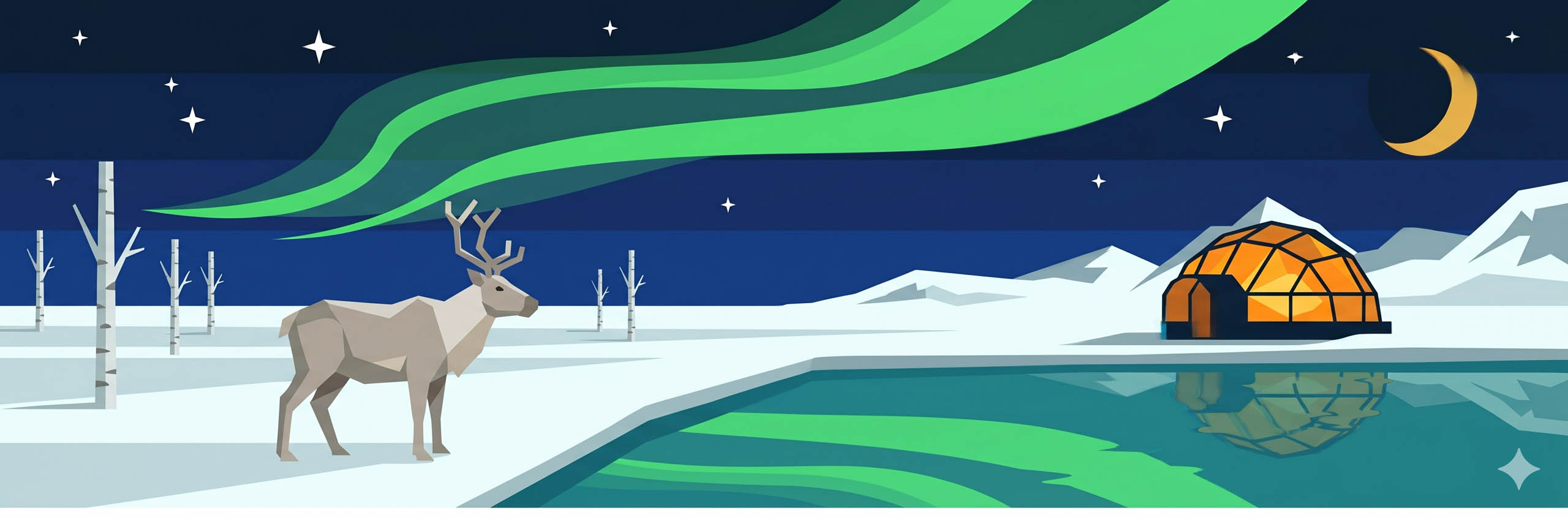
 Finnish Lapland around Saariselkä and Levi sits at 68°N - inside the auroral oval, where aurora occurs on most clear nights during active periods. Glass igloo and aurora cabin experiences are well-developed here. Rovaniemi offers accessibility; the far north offers frequency.
 Kp 1–5
 Abisko in Swedish Lapland is famous for the "blue hole" - a persistent clearing in the clouds above Lake Torneträsk created by local topography. The Aurora Sky Station there is one of the best dedicated aurora-watching facilities in Europe. Kiruna's ICEHOTEL adds a complementary cold-weather experience.
 Kp 1–4
 Yellowknife in the Northwest Territories sits directly under the auroral oval and is one of the world's most reliable aurora viewing destinations. Churchill, Manitoba is unique - it combines aurora watching with polar bear season. The Canadian Rockies (Banff) offer a southern option with stunning mountain foregrounds.
 Kp 1–2
 Nuuk at 67°N magnetic latitude needs only Kp 1 - aurora is visible on most clear nights during the dark season. Ilulissat at 72°N sits among drifting icebergs from the UNESCO-listed Icefjord. Kangerlussuaq, on the ice cap margin at 73°N, has over 300 clear nights per year - the clearest skies of any Greenlandic settlement. Logistically demanding but aurally unmatched.
 Kp 1–5
 Fairbanks, Alaska sits at the same latitude as Tromsø and rivals it as a North American aurora capital. The contiguous US gets aurora during moderate storms - Minnesota, Michigan's Upper Peninsula, and Montana all see regular displays at Kp 5. Maine is the north-eastern US option, facing dark North Atlantic skies.
 Kp 5–7
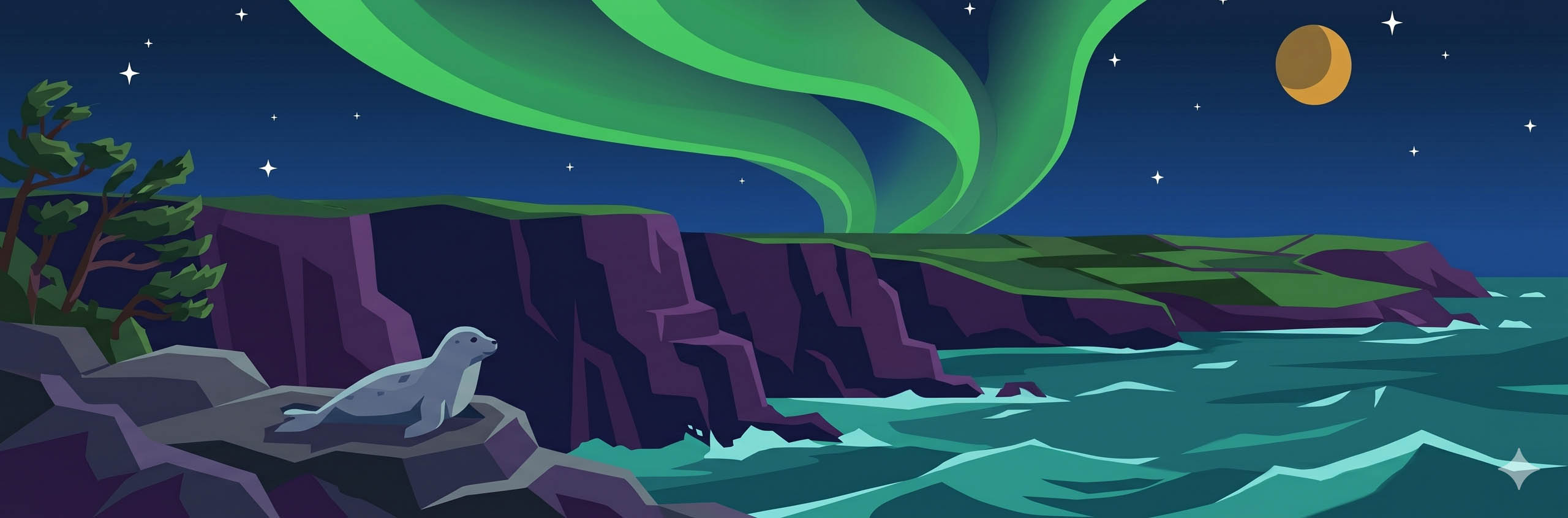
 Donegal at 54°N magnetic latitude is Ireland's prime aurora county, needing Kp 5, with Malin Head on its northern tip a step lower at Kp 4. Dublin and Galway need Kp 5, Cork Kp 6. The Atlantic-facing west coast gives open northern sea horizons with minimal light pollution, making Ireland's dark sky conditions competitive with equivalent-latitude UK sites.
 Kp 5–7
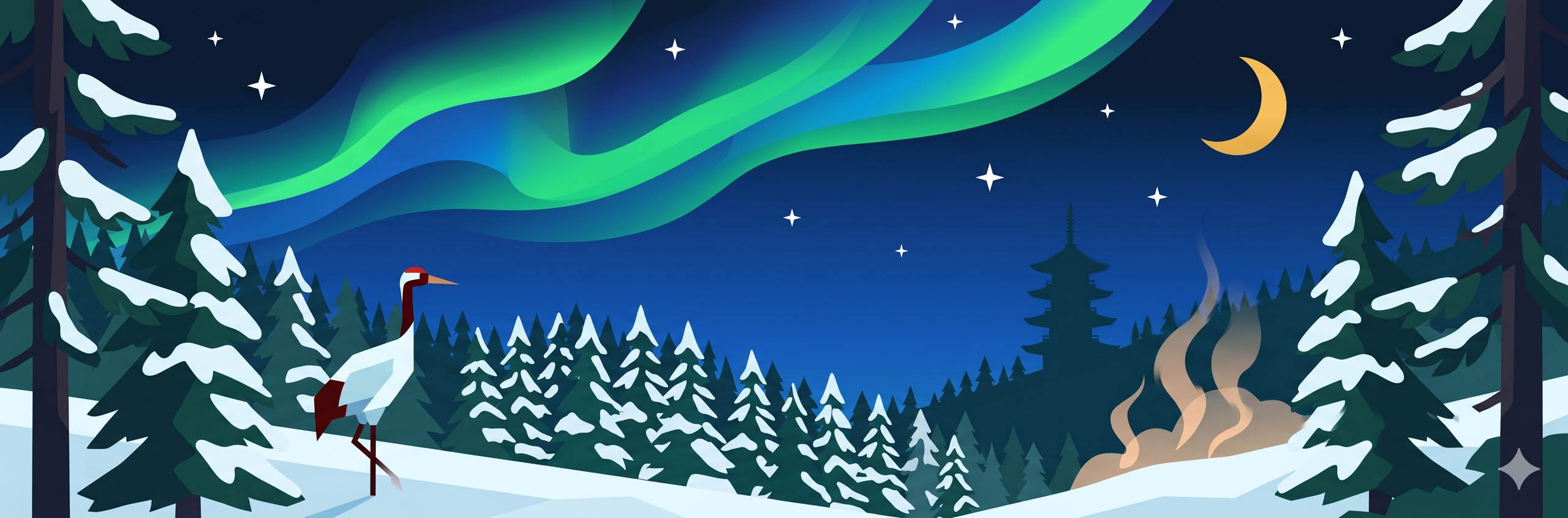
 Hokkaido, Japan's northernmost island, sits at 43-45°N geographic but only ~35-39° geomagnetic latitude. Aurora requires a major geomagnetic storm - Kp 6 from Rebun and Rishiri islands (Japan's northernmost positions), Kp 6 from Wakkanai, Kp 8 from Shiretoko, Abashiri and Sapporo. The 2025-2026 solar maximum produced several visible events across Hokkaido. Frame aurora as an exceptional bonus on a Hokkaido winter trip, not a nightly event.
Europe
Lower-latitude European destinations
 Kp 3
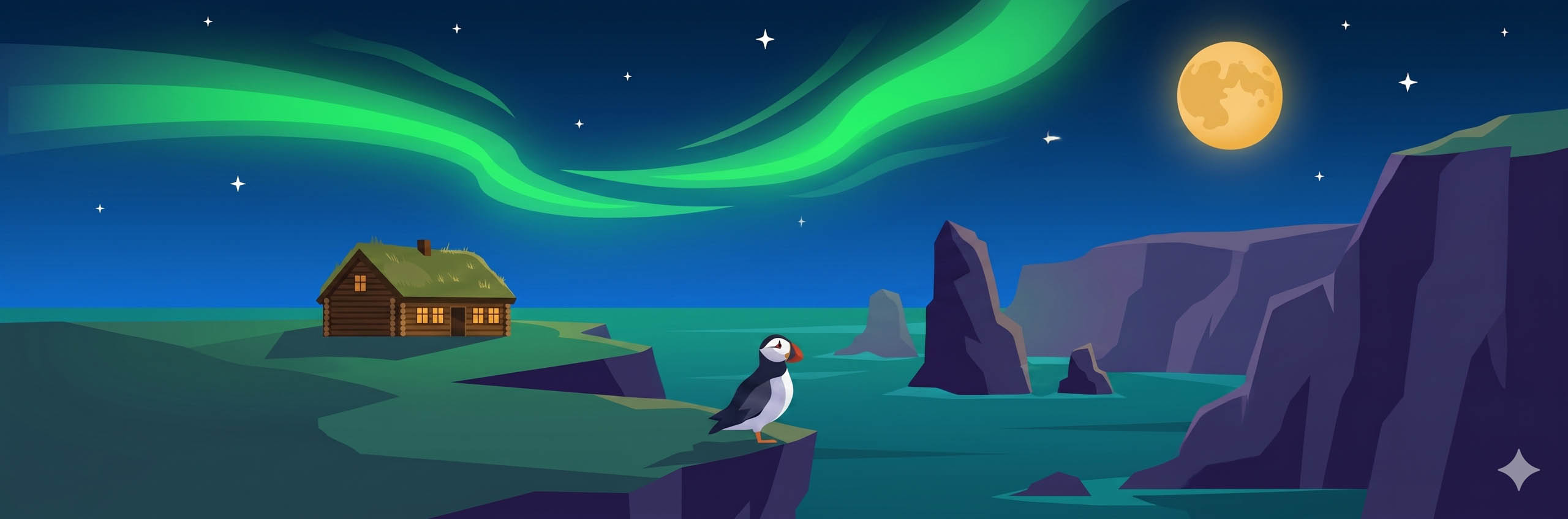
Kp 3 A compact North Atlantic archipelago at 61°N magnetic latitude, halfway between Scotland and Iceland. Kp 3 is all that is needed on a clear night - aurora is a regular occurrence during active solar periods. The islands have minimal light pollution, dramatic sea-cliff scenery, and open northern Atlantic horizons. One of the lowest aurora thresholds of any accessible Atlantic destination.
 Kp 5–7
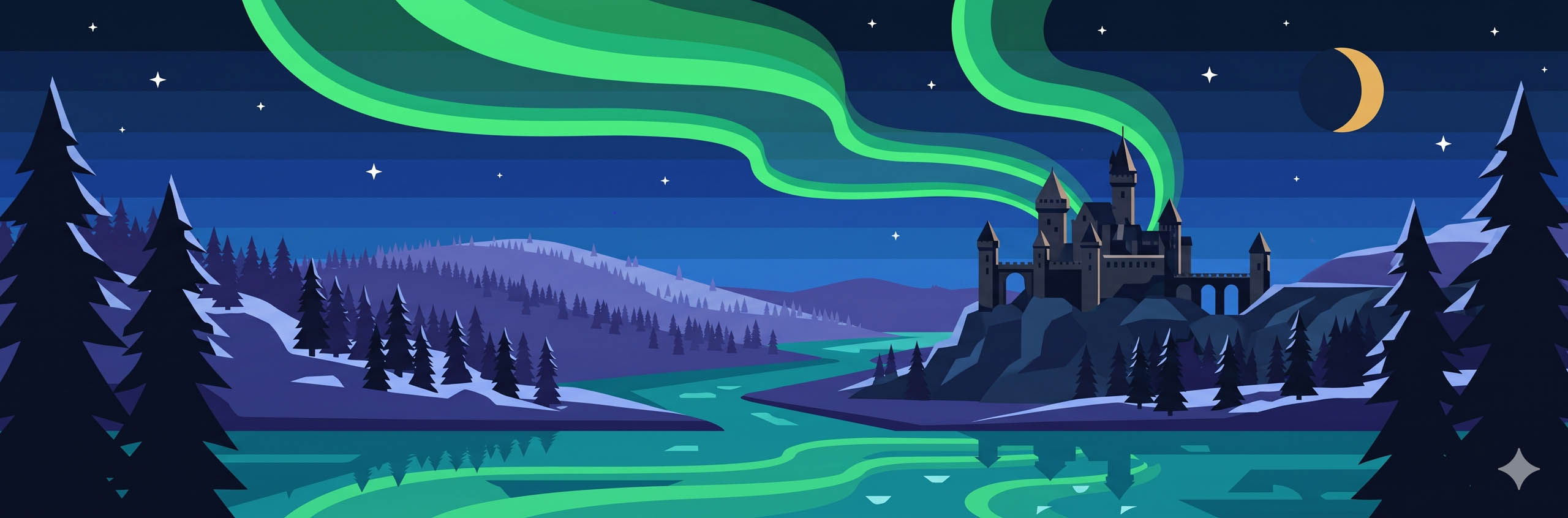
 Hamburg at 51°N needs Kp 5 from the Lüneburger Heide or Baltic coast. Berlin at 50°N needs Kp 6-7 from the Müritz lake district or Schorfheide-Chorin. The G5 storm of May 2024 produced widespread aurora across northern Germany. Aurora requires moderate to strong storms but is achievable several times per year during solar maximum.
 Kp 6–7
 Amsterdam at 51°N needs Kp 5-6 and Rotterdam at 50°N Kp 6 - strong G2 storms. The Wadden Sea islands and Zeeland coast give the best dark north-facing positions. The G5 storm of May 2024 produced photographs from Amsterdam and the Dutch coast. Outside major storm events, aurora is not visible from the Netherlands.
 Kp 5–6
 Copenhagen at 53°N needs Kp 5-6 from the north Zealand coast. North Jutland near Skagen, the country's northernmost point, has a lower threshold. Open Skagerrak and Kattegat coastlines give north-facing positions throughout the country. G2 storms produce visible aurora from Danish dark sites on clear nights.
 Kp 3–4
 Tallinn at 55°N needs only Kp 3-4 - the same threshold as Bergen in Norway. Lahemaa National Park on the north coast faces the Gulf of Finland with Bortle 2-3 sky. Aurora is a regular occurrence during active solar periods. One of Europe's most underrated aurora destinations.
 Kp 4–5
 Riga at 53°N needs Kp 4-5 from Baltic coastal sites. Cape Kolka at the tip of the Courland Peninsula is Latvia's best aurora position - north-west-facing over the open Baltic with Bortle 2 sky. Gauja National Park is a closer inland alternative at 60 km from Riga. G1-G2 storms produce aurora from the Latvian coast several times per year during solar maximum.
 Kp 5
Kp 5 Klaipėda at 52°N needs Kp 5 from the Baltic coast - the same threshold as northern England. The Curonian Spit, a UNESCO World Heritage sand dune peninsula, gives north-facing Baltic sea horizons with Bortle 2–3 sky. Part of the Baltic aurora circuit running south from Estonia and Latvia. The G5 storm of May 2024 produced aurora from Lithuanian beaches and dune crests.
 Kp 5–7
 Gdańsk on the Baltic at 54°N is Poland's best-positioned major city, needing Kp 5 from the Hel Peninsula. The Masurian Lakes district in the northeast combines the same latitude with some of the darkest skies in central Europe. Strong G2–G3 storms reach across Poland. The G5 storm of May 2024 produced aurora photographed across the whole country.
 Kp 6–7
 Aurora requires strong geomagnetic storms at 46°N magnetic. Šumava National Park on the German border reaches 1,000–1,300 m with Bortle Class 2 sky - the darkest accessible area in the country. Strong G2–G3 storms produce visible aurora from elevated Czech positions. The G5 storm of May 2024 was photographed from Šumava's hilltops and Prague's elevated parks.
 Kp 7–8
 Romania sits at the outer edge of European aurora territory at 44–47°N. The Carpathian Mountains at 1,500–2,500 m give elevated dark sky positions with Bortle Class 1–2 in Retezat National Park. G4–G5 storms are needed for reliable displays. The G5 storm of May 2024 produced vivid red aurora photographed from mountain ridges and Transylvanian villages.
Southern hemisphere
Aurora australis destinations
 Kp 4–5
 Punta Arenas on the Strait of Magellan sits at 42°S magnetic latitude, needing Kp 6 on a clear night, and it is the gateway to Torres del Paine to the north. Long, dark winter nights and open southern horizons over the Strait give genuine aurora australis access at the bottom of the continent.
Kp 3–6 Ushuaia at the tip of Tierra del Fuego sits at 43°S magnetic latitude - the southernmost city access to aurora australis in the world, needing Kp 6 from the Beagle Channel waterfront. El Calafate near Perito Moreno Glacier sits at 39°S and needs Kp 6. Argentina's southern Patagonia combines genuine aurora access with outstanding Andean and Fuegian scenery.
 Kp 3–5
 Stewart Island at 55°S has New Zealand's lowest aurora threshold - Kp 3 from Mason Bay's south-facing beaches. Invercargill and Gore both need Kp 4, as NZ's southernmost city and Southland. Te Anau gives Kp 4 and Milford Sound Kp 5, both under Bortle Class 1-2 dark sky. Queenstown and Dunedin need Kp 4-5. The Aoraki Mackenzie Dark Sky Reserve around Lake Tekapo gives Kp 5 from Bortle Class 1 sky. Face south, not north.
 Kp 5–7
 Tasmania sits at 55°S magnetic latitude with a Kp 4 threshold - the lowest of any Australian state. Hobart and Launceston give the best access to the aurora australis. Mainland options include Falls Creek in the Victorian Alps (50°S, 1600 m elevation, Kp 6-7) and Melbourne's Mornington Peninsula. The G5 storm of May 2024 produced aurora visible across southern Australia.
 Kp 7–8
 Extreme storm required. At 32–33°S magnetic latitude, Sutherland and Cape Town both need Kp 8 - a G4 geomagnetic storm. The South African Astronomical Observatory at Sutherland (1798 m, Bortle 1-2) is the best aurora viewing position in Africa. Cape Town's Cape Point gives accessible southern horizon. Aurora australis was confirmed from both locations during the G5 storm of May 2024.

What aurora australis is, how it differs from the northern lights, and how to see it from the southern hemisphere.
Can you see it from where you are?
Share your location and we'll tell you tonight's odds for your exact spot: the Kp you need, whether the sky is dark enough, and the cloud forecast.
Use your location or search a town above to see tonight's personal forecast.
Related pages
Northern Lights UK
Live UK aurora forecast with Kp status for all regions.
Northern Lights Norway
Norway aurora forecast from Oslo to Svalbard.
Northern Lights Iceland
Iceland aurora forecast - Reykjavik to Akureyri.
What Is the Kp Index?
How the Kp scale works and why latitude determines the threshold.
Best Time to See Northern Lights
Season, timing, and solar cycle context.