Northern lights in Faroe Islands tonight
The Faroe Islands sit at 62°N magnetic latitude – Kp 3 is the threshold from dark positions across the archipelago. The dramatic cliff, fjord, and waterfall landscapes give aurora foregrounds found nowhere else in Europe. Weather is the main challenge: the Atlantic position brings cloud that clears quickly.
How the sky looks right now
Live Kp index from NASA & NOAA, mapped to what it means across Faroe Islands.
Low activity expected. Solar conditions are currently quiet. Chances of aurora visibility are low tonight.
How far south the glow reaches
At Kp 1, the auroral oval reaches ~76°N - covering every Faroe Islands town within range.
7-day outlook for Faroe Islands
Tonight shows the live Kp reading. The nights after it show the Kp expected from any coronal mass ejection DONKI predicts will arrive that day, and a quiet baseline of Kp 2 where no arrival is forecast, so tonight's activity does not carry forward. For a longer-range view based on solar rotation, see NOAA's 27-day outlook.
Forecasts beyond 3 days are lower confidence - check back nightly as the outlook firms up.
Aurora visibility by town
Each spot lights up at a different Kp threshold thanks to its latitude. It comes down to the clouds.
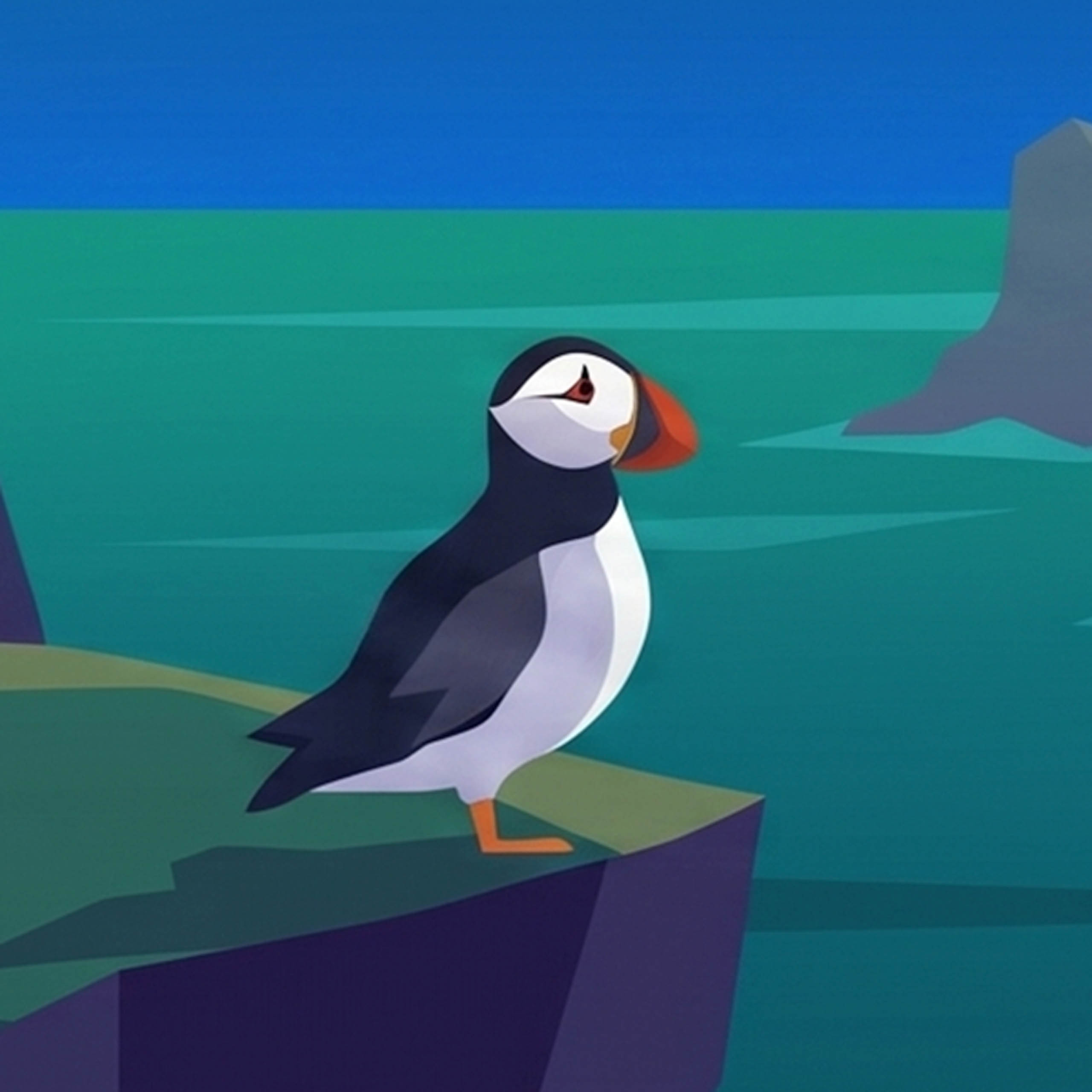
Lundi the puffin's tip: The Faroe Islands sit at 62° N, well within the auroral zone on active nights. A Kp of 3-4 is enough to see aurora on a clear night. The problem the Faroes always face is weather - they are surrounded by the North Atlantic and cloud cover is frequent year-round. When a clear night does arrive between October and March, the archipelago has almost no light pollution once you leave Tórshavn.
Best months for Faroe Islands (Tórshavn)
September, March and October average the most aurora nights. May to July count zero: the sky never gets fully dark, so nothing counts however active the Sun is. Atlantic weather is the limiting factor here, and it settles more often in autumn than at midwinter.
Three ways to do it
Gásadalur
The clifftop village on Vágar above the Múlafossur waterfall and the Sørvágsvatn lake illusion, both facing the open Atlantic. The most photogenic aurora foreground in the archipelago – and the most sought after globally.
Threshold · Kp 3Tórshavn (Sornfelli)
Sornfelli summit at 749 m on Streymoy sits above most coastal cloud and gives a panoramic view in all directions. When low cloud blankets the fjords, this is where to go – and it's 20 minutes from the capital.
Threshold · Kp 3Eiði
The north coast of Eysturoy, where the Risin og Kellingin basalt pillars rise from the North Atlantic with open ocean beyond. One of the most dramatic north-facing horizons in the Faroes for aurora photography.
Threshold · Kp 3Why the Faroes are an aurora photographer's destination
The Faroe Islands sit at around 61°N magnetic latitude – the same band as Ålesund in Norway. Kp 3 is the threshold from dark positions across the archipelago. Outside Tórshavn, light pollution is almost absent, and the compact size of the islands means a dark sky position is never far away. The dramatic cliff, fjord, and waterfall landscapes give aurora foregrounds found nowhere else in Europe.
Weather is the main obstacle. The Atlantic position means cloud and mist arrive and clear quickly, so checking the local forecast hourly matters more here than almost anywhere else. The flip side is that high-pressure windows do occur, and when they do, the sky clears completely. Sornfelli summit at 749 m sits above most coastal cloud – a valuable escape route when mist fills the fjords below.
When high pressure settles and the sky clears, Kp 3 from Sornfelli summit, the clifftops above Gásadalur, or the north coast near Eiði can produce displays that span the full northern horizon. The Múlafossur waterfall at Gásadalur with aurora above it is one of the most-photographed aurora images in the world – a foreground unique to the Faroes and worth planning a trip around.
Compare Faroe Islands locations tonight
Pre-filled with Faroe Islands's top spots - search 369 countries and towns worldwide to compare any of them side by side.
How often does the aurora appear in Faroe Islands?
Average nights per month the Kp reached Tórshavn's threshold, from 15 years of geomagnetic data (2010–2024).
Counts the Kp threshold only – Atlantic cloud cover is not included. The Faroes have some of the most variable weather in Europe; always check the Faroese Met Office cloud forecast alongside the Kp alert.
Plan your trip to Faroe Islands
Build in flexibility
Allow at least 4-5 nights in the Faroes to give a realistic chance of a clear window. Atlantic weather systems move through fast – a night that looks cloudy at sunset can clear by midnight. Keep Sornfelli summit in mind as an above-cloud option.
The Múlafossur shot
Gásadalur with the Múlafossur waterfall is the most sought-after aurora foreground in the archipelago. Arrive in daylight to check the access path and get your composition set before dark. A Kp 3 event from here is worth planning a trip around.
Related pages
Northern Lights Iceland
Iceland overview – comparable latitude, direct flights from the Faroes.
Read →Northern Lights Norway
Norway aurora hub – Tromsø and Bergen.
Read →What Is the Kp Index?
How Kp 3 determines aurora visibility at 62°N.
Read →Aurora Locations Worldwide
Global aurora forecast hub.
Read →Northern Lights Tórshavn Tonight
Tórshavn – the Faroes capital with Sornfelli summit dark sky.
Read →Aurora photographs from Faroe Islands
Real photos sourced from Wikimedia Commons.
 Aurora Boreal Marco Brotto-30
 Guides for visiting Faroe Islands
In-depth planning resources for your northern lights trip.
 Planning All destinations
 How to Plan a Northern Lights Trip
Destination, timing, packing, expectations, and how to read a forecast.
 Science Aurora science
 What Is the Kp Index?
How the planetary index works and why Kp 3 is the Faroes threshold.
 Travel guide Iceland
 Northern Lights Iceland – Complete Travel Guide
Similar latitude, similar threshold – how the Faroes and Iceland compare for aurora.
 Photography Photography
 Aurora Photography for Beginners
How to photograph the northern lights – settings, gear, and timing for the Múlafossur waterfall shot.
 Planning All destinations
 Northern Lights Alerts – How They Work
Set up Kp 3 alerts and combine them with the Faroese Met Office cloud forecast.
 Location Tórshavn
 Northern Lights Tórshavn Tonight
Live forecast for the Faroes capital – Sornfelli summit dark sky, Kp 3.