Northern lights in Scotland tonight
Scotland spans from Shetland at 61°N - where Kp 2 is enough - down to Galloway at 55°N needing Kp 4-5. The north-west Highlands, Hebrides and Northern Isles are some of the most accessible dark-sky aurora locations in Europe.
How the sky looks right now
Live Kp index from NASA & NOAA, mapped to what it means across Scotland.
Low activity expected. Solar conditions are currently quiet. Chances of aurora visibility are low tonight.
How far south the glow reaches
At Kp 1, the auroral oval pushes down to ~76°N - covering every Scotland town below.
7-day outlook for Scotland
Predicted peak Kp each night, from NOAA's 3-day forecast and the 27-day solar-recurrence model.
Forecasts beyond 3 days are lower confidence - check back nightly as the outlook firms up.
Aurora visibility by town
Each spot lights up at a different Kp threshold thanks to its latitude. It comes down to the clouds.
Shetland Islands
61°NNorthernmost UK islands - Kp 2 from Eshaness and Ronas Hill.
Orkney Islands
59°NDark-sky archipelago - Kp 3 from Hoy and Birsay.
Isle of Lewis
58°NButt of Lewis and Callanish Standing Stones.
Inverness
58°NHighland capital - Kp 3 from the Black Isle coast and Loch Ness.
Scottish Highlands
58°NGlen Affric, Torridon, Assynt - remote dark-sky glens.
North Coast 500
58°NDurness, Strathy Point - north-coast dark-sky circuit.
Outer Hebrides
57°NCallanish, Luskentyre - Bortle Class 1-2 Atlantic coast.
Isle of Skye
57°NNeist Point and the Trotternish peninsula.
Fort William
57°NGreat Glen and Nevis range - Kp 3-4.
Cairngorms
57°NPlateau at 1,000 m - Tomintoul, Loch Morlich, Bortle 2.
Aberdeen
57°NNorth-east coast - Kp 3-4 from Forvie and Muchalls.
Dundee
56°NAngus coast, north-facing dark sky at Kp 4.
Stirling
56°NLoch Lomond and the Trossachs on the doorstep.
Edinburgh
56°NPentland Hills and East Lothian coast at Kp 4.
Glasgow
55°NLoch Lomond dark sky 30 minutes north.
Argyll
56°NKilmartin Glen, Loch Awe, Sound of Jura.
Dumfries & Galloway
55°NGateway to Galloway Forest Dark Sky Park.
Galloway Forest
55°NUK's first Dark Sky Park - IDA Gold Tier, Kp 4.
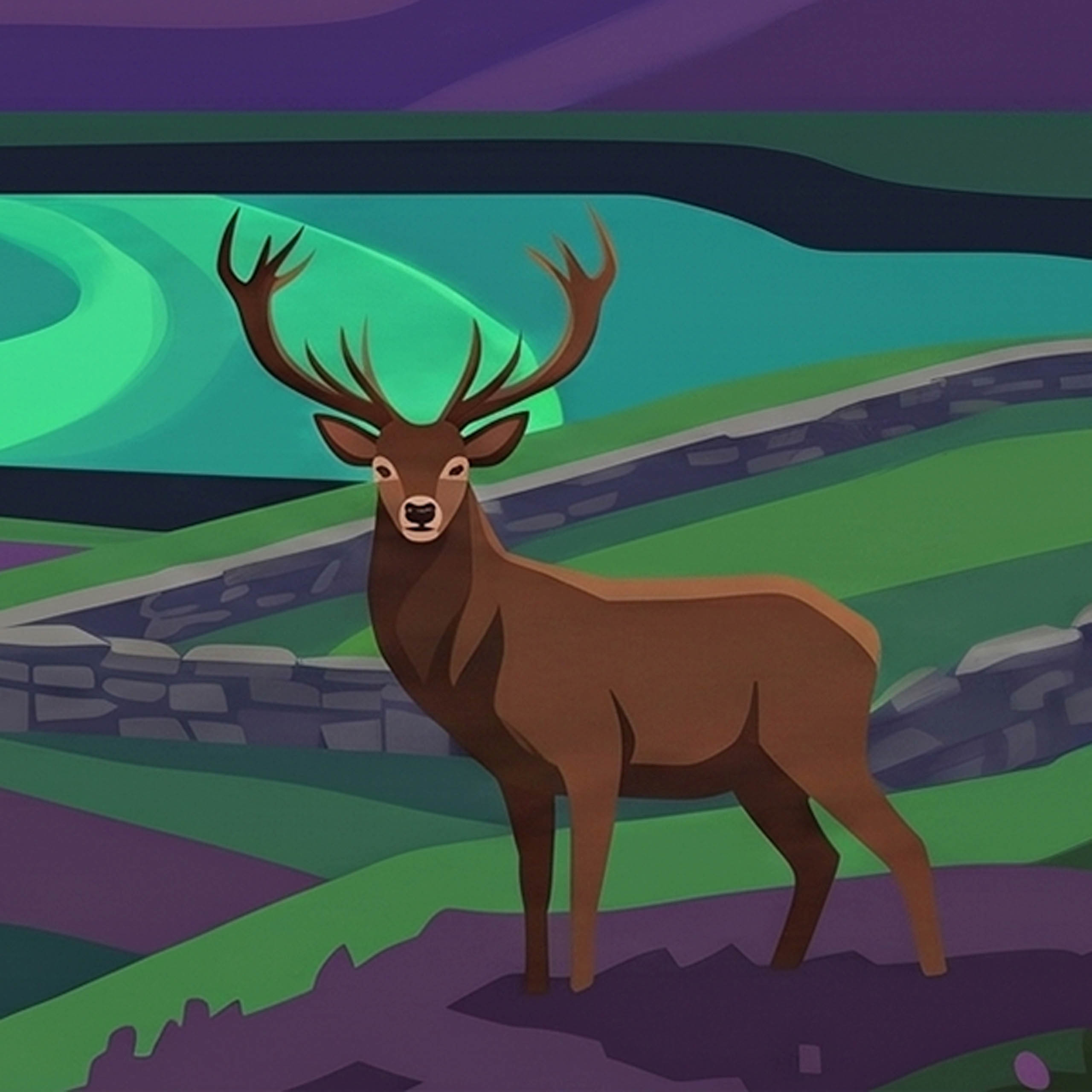
Beira the red deer's tip: Scotland sits at around 56-58° N geographic latitude but the magnetic pole shift means you need a Kp of at least 4 to reliably see anything from the central belt. The Northern Isles sit closer to the auroral oval - Shetland can catch Kp 2 activity on a clear night. Light pollution is the bigger problem south of Inverness, so drive north if you can.
Three ways to do it
Shetland Islands
At 61°N magnetic latitude, Shetland is the most northerly part of the British Isles and the closest to the auroral oval. Eshaness and Ronas Hill give Bortle Class 1 sky facing open sea, and Kp 2 is enough on a clear night - similar odds to Bergen in Norway.
Threshold · Kp 2Scottish Highlands
Torridon, Assynt and Glen Affric sit at 57-58°N and combine dark, north-facing terrain with road access. The North Coast 500 route along the north shore gives a string of viewpoints over open water towards the oval.
Threshold · Kp 3Galloway Forest
The UK's first International Dark Sky Park, with Gold Tier status and near-Bortle 2 conditions in the south of the country. It needs the highest Kp on this list, but during a strong storm it puts aurora within reach of Glasgow and the central belt.
Threshold · Kp 4Why Scotland stands out
Scotland is the most accessible aurora destination in the British Isles, but it sits at the southern edge of the auroral oval rather than inside it. Shetland and Orkney, at 61-59°N magnetic latitude, need Kp 2-3 - comparable to Bergen in Norway - while the Highlands, Hebrides and Cairngorms at 57-58°N need Kp 3-4. Edinburgh and Glasgow, further south at 55-56°N, need Kp 4 and a clear run of geomagnetic activity to get a look.
This is an occasional treat rather than a nightly event. Aurora here is tied to geomagnetic storms - episodes when the Kp index climbs to 4 or higher across a few hours - and those occur on the order of several dozen nights a year during an active solar period, fewer in quieter years. The pay-off is that no flight is needed: the north-west Highlands (Torridon, Assynt, the North Coast 500) and the Northern Isles (Shetland, Orkney) put dark, north-facing coastline within a day's drive of most of the country.
Cloud is the main obstacle. Scotland sits in the path of the same Atlantic weather systems that bring changeable conditions to Iceland, and the west coast in particular sees frequent overcast spells. Watching the short-range cloud forecast and being ready to drive to a clearer stretch of coast is part of how a Scottish aurora trip works.
Compare Scotland locations tonight
Pre-filled with Scotland's top spots - search 400+ locations worldwide to compare any of them side by side.
Up to 8 locations
How often does the aurora appear in Scotland?
Average nights per month the Kp reached Shetland Islands's threshold, from 15 years of geomagnetic data (2010–2024).
Counts the Kp threshold only - cloud cover is not included. Scotland's Atlantic weather brings frequent overcast spells, particularly on the west coast, so clear-sky nights are fewer than these counts alone suggest.
Plan your trip to Scotland
Best window
The September to April season offers a modest number of nights where the Kp threshold is met by location - cloud will reduce that further, so treat any clear, active night as a chance worth taking.
How long to stay
Aurora here is tied to storms rather than nightly activity. A few nights based in Shetland, Orkney or the north-west Highlands gives a realistic chance of catching an active, clear night.
Related pages
Northern Lights Scotland Guide
Complete travel guide - locations, Kp thresholds, when to go.
Read →How to Plan a Northern Lights Trip
Complete planning guide - destination, timing, packing, and expectations.
Read →Northern Lights Norway
Compare with Norway aurora thresholds from Tromso to Oslo.
Read →Northern Lights Iceland
Iceland - Kp 2-3 from most of the island.
Read →What Is the Kp Index?
How the Kp scale determines aurora visibility.
Read →Scotland Aurora Photography Locations
The best locations in Scotland to photograph the northern lights.
Read →Aurora photographs from Scotland
Real photos sourced from Wikimedia Commons.
 Northern lights (54057037447)
  Northern Lights over Edinburgh, Scotland (54061453696)
  Northern Lights over Edinburgh, Scotland (54061697508)
  Northern Lights over Edinburgh, Scotland (54061697513)
  Northern Lights over Edinburgh, Scotland (54061697553)
  Northern Lights over Edinburgh, Scotland (54061781784)
 Guides for visiting Scotland
In-depth planning resources for your northern lights trip.
 Travel guide Scotland
 Northern Lights Scotland Guide
Complete planning - locations, timing, Kp thresholds, and what to pack.
 Photography Scotland
 Scotland Aurora Photography Locations
The best dark-sky spots in Scotland to photograph the northern lights.
 Planning All destinations
 How to Plan a Northern Lights Trip
Destination, timing, packing, expectations, and how to read a forecast.
 Science Aurora science
 What Is the Kp Index?
How the planetary index is measured, what the numbers mean, and when to act.
 Travel guide Scotland
 Northern Lights Scotland - Photography Guide
Camera settings, foregrounds, and timing for shooting Scottish aurora.
 Location Shetland
 Northern Lights Shetland Islands Tonight
Live forecast for the UK's lowest aurora threshold - Kp 2 from Eshaness.