Northern lights in Argyll tonight
West Coast Scotland · 56° magnetic latitude · Kp 4 threshold
Kp 1 is well below the Kp 4 threshold needed for aurora to be visible from Argyll.
7-day outlook for Argyll
Based on CME arrival predictions from NASA DONKI. Arrival times ±6 hours.
auroratonight.space
What Kp is needed here?
Argyll sits at a magnetic latitude of approximately 56°N. The Kp index - a global measure of geomagnetic activity on a scale from 0 (quiet) to 9 (extreme storm), updated every 3 hours - needs to reach Kp 4 before the auroral oval expands far enough south to be visible from here.
At Kp 4, visibility is possible from Argyll but skies need to be clear and dark. Cloud cover and light pollution remain the main obstacles even when Kp is high enough.
Best dark sky sites near Argyll
Light pollution is the biggest obstacle after cloud cover. These sites give you the best dark northern horizon within reach.
Kilmartin Glen
Get directions ↗Kilmartin Glen holds one of the highest concentrations of prehistoric monuments in Scotland - standing stones, cairns, and cup-marked rocks stretch for several kilometres along the valley floor. The glen faces north-west and has minimal artificial lighting. Aurora watching here combines one of Scotland's most significant archaeological landscapes with genuinely dark sky. The A816 gives roadside access along the whole glen.
Loch Awe north shore - Kilchurn Castle
Get directions ↗The ruined Kilchurn Castle at the north end of Loch Awe sits on a peninsula facing north-west with the loch as a reflective foreground. The castle ruin is freely accessible and well-known as a photography location. Loch Awe is one of the longest inland lochs in Scotland and the south-west exposure gives open sky to the west and north-west.
Crinan and the Sound of Jura
Get directions ↗Crinan is a tiny canal village at the western end of the Crinan Canal, where it opens into the Sound of Jura. The canal basin and the rocks above the village face west and north-west over open sea. On clear nights, the sky quality is significantly better than inland Argyll, with no towns in sight. The Moine Mhor nature reserve nearby gives wider north-facing views.
Knapdale and Loch Sween
Get directions ↗The Knapdale peninsula south of Crinan is one of the least visited parts of Argyll. Loch Sween's western shore faces open sea between Jura and Kintyre with negligible light pollution. Castle Sween, one of Scotland's oldest stone castles, sits at the loch head. The B8025 south of Bellanoch gives access to this section.
Best time to see the northern lights in Argyll
Argyll's aurora season runs from late September through to March, when nights are long enough for truly dark skies. The equinox months, September and March, bring a natural boost in geomagnetic activity, making them statistically the best of the season. Summer months bring too much twilight for aurora to be visible at this latitude.
Activity peaks around the September and March equinoxes, when Earth's magnetic field geometry is most favourable for coupling with the solar wind. Events during these two windows tend to produce the strongest displays of the year for observers at Argyll's latitude.
April through August brings persistent astronomical twilight that washes out aurora completely. Even strong events (Kp 6+) remain invisible during this period because the sky never gets dark enough.
How often does the aurora appear in Argyll?
Average nights per month the Kp reached Argyll's threshold of 4+, from 15 years of geomagnetic data (2010–2024).
Counts the Kp 4+ threshold only - cloud cover and local darkness are not included.
Kp data: GFZ German Research Centre for Geosciences, CC BY 4.0
Plan your trip to Argyll
Best window
The February to April window averages 14 aurora nights - the strongest consecutive stretch of the year.
How long to stay
For your best chance in March, plan at least 9 nights.
Related pages
Scotland Aurora Hub
All Scottish aurora locations with live forecast.
Read →Northern Lights Glasgow Tonight
Glasgow aurora forecast - Loch Lomond dark sky to the north.
Read →Scottish Highlands Aurora Guide
Glen Affric, Torridon, and Assynt - Kp 3 Highland dark sky.
Read →Galloway Forest Dark Sky Park
UK's first Dark Sky Park at Kp 4 - south-west Scotland.
Read →Tips for Viewing the Northern Lights
Dark sites, timing, and what to look for on a clear night.
Read →Planning your aurora trip
In-depth guides to help you plan a trip to see the northern lights.
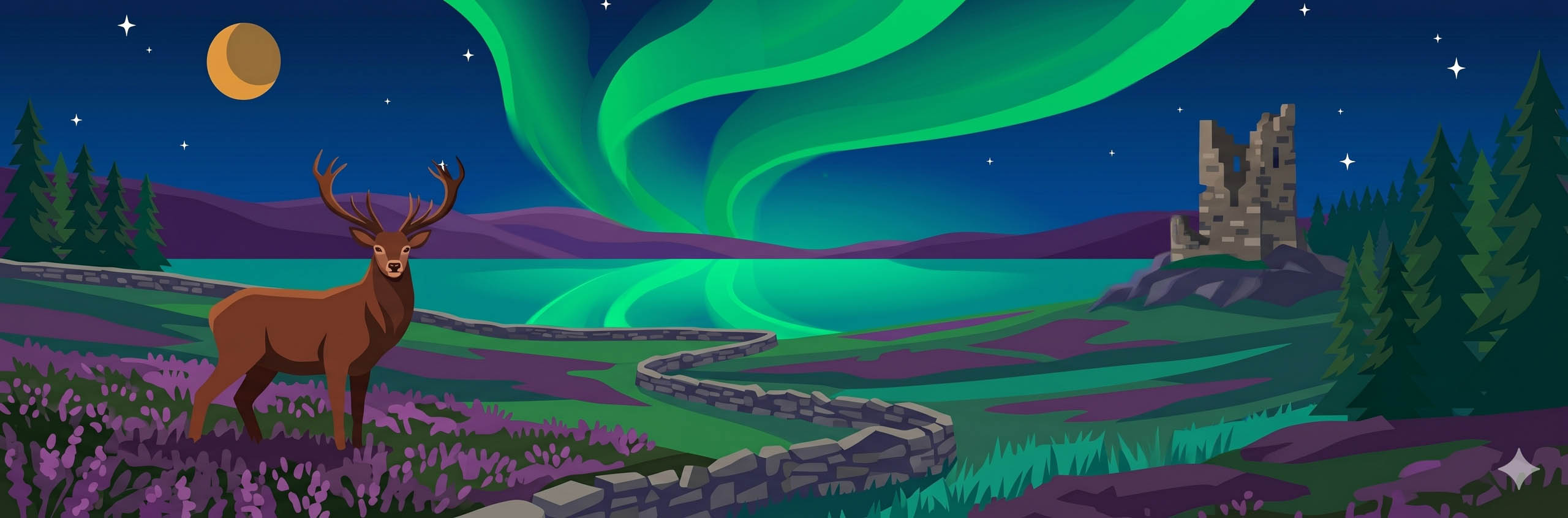 Travel GuideScotland
Northern Lights Scotland - Complete Travel Guide
Shetland, Orkney, Highland coasts, and Galloway Forest - the UK's best aurora destinations.
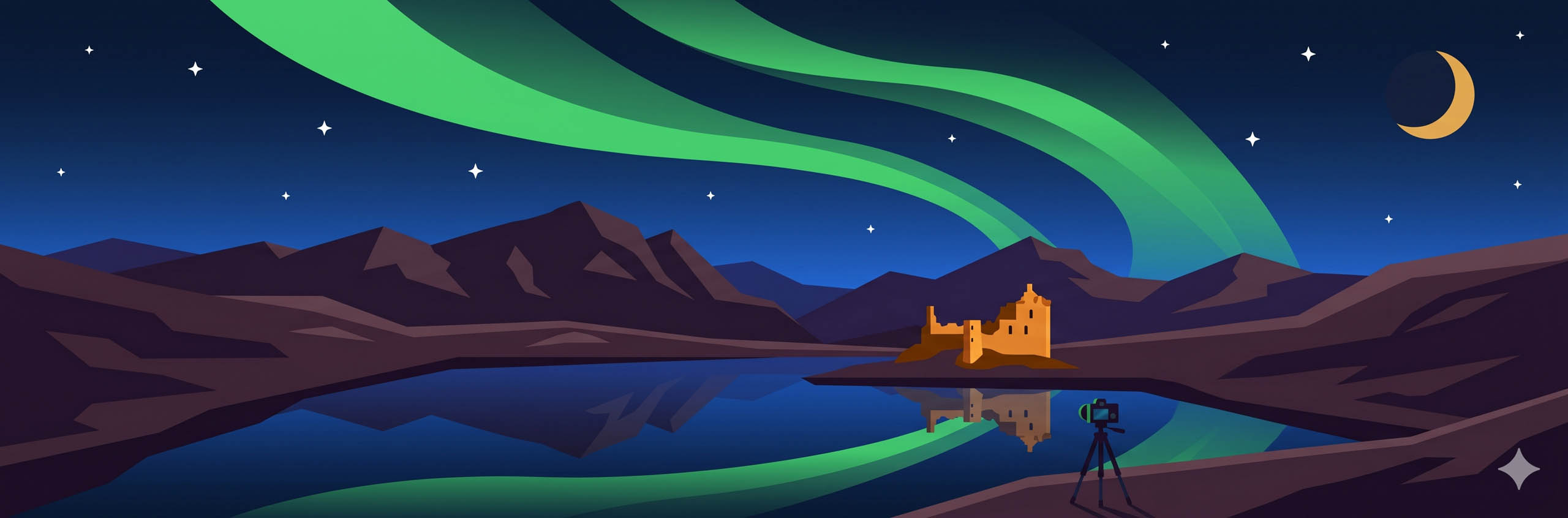 PhotographyScotland
Northern Lights Scotland - Photography Guide
Dark sky locations, foregrounds, and the best conditions for aurora photography in Scotland.
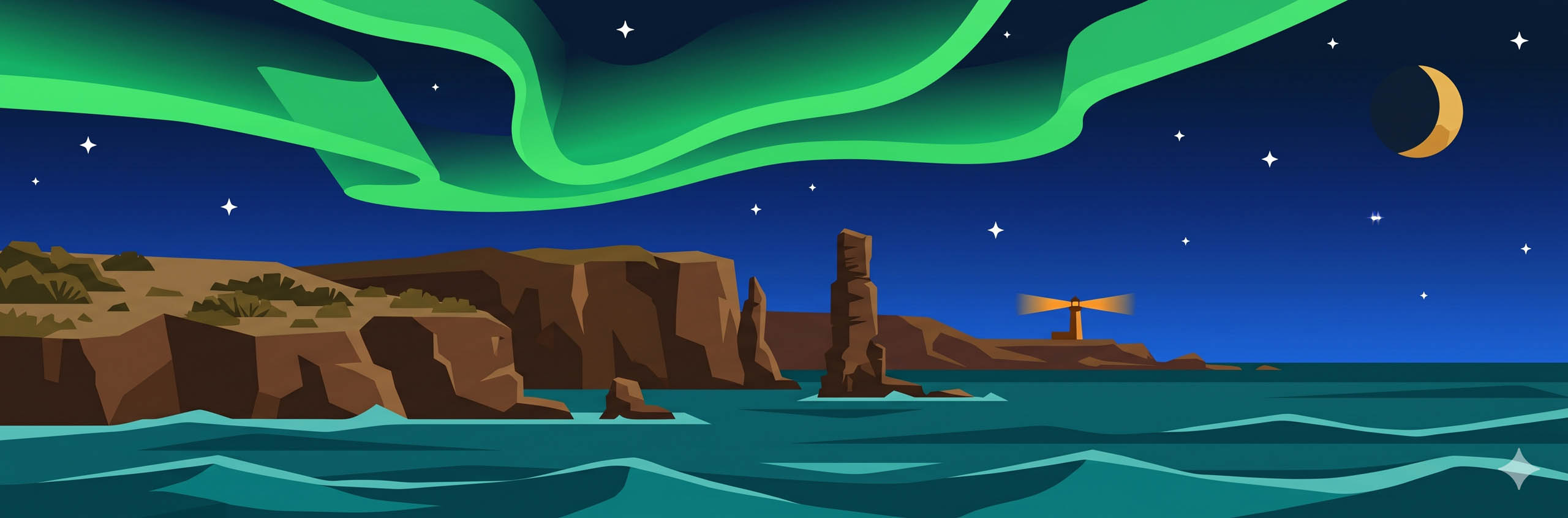 PhotographyScotland
Scotland Aurora Photography Locations
Specific spots across the Highlands, Orkney, and Shetland rated for aurora photography.