Northern lights in Japan tonight
Hokkaido sits at 42-45°N geographic latitude but only ~35-39° geomagnetic latitude, the figure that decides where aurora reaches, and a low one well outside the auroral oval under normal conditions. It needs a major geomagnetic storm: Kp 7-8 at best from Wakkanai, Kp 8-9 across the rest of the island. A rare sight here, not a nightly one - worth knowing about if you are visiting Hokkaido during an active spell.
How the sky looks right now
Live Kp index from NASA & NOAA, mapped to what it means across Japan.
Low activity expected. Solar conditions are currently quiet. Chances of aurora visibility are low tonight.
How far south the glow reaches
At Kp 1, the auroral oval reaches ~76°N - covering every Japan town within range.
7-day outlook for Japan
Tonight shows the live Kp reading. The nights after it show the Kp expected from any coronal mass ejection DONKI predicts will arrive that day, and a quiet baseline of Kp 2 where no arrival is forecast, so tonight's activity does not carry forward. For a longer-range view based on solar rotation, see NOAA's 27-day outlook.
Forecasts beyond 3 days are lower confidence - check back nightly as the outlook firms up.
Aurora visibility by town
Each spot lights up at a different Kp threshold thanks to its latitude. It comes down to the clouds.
Wakkanai
39°NJapan's northernmost city - lowest aurora threshold in Japan.
Rebun Island
39°NJapan's northernmost inhabited island, Sukoton Cape.
Rishiri Island
39°NRishiri-Fuji volcano, Otatomari Pond reflection.
Abashiri
38°NNortheast Hokkaido coast, Sea of Okhotsk, drift ice.
Daisetsuzan
37°NJapan's largest national park, Asahidake ropeway to 1,600 m, Bortle 2.
Shiretoko
39°NUNESCO wilderness, Bortle 1-2, Five Lakes, Utoro coast.
Biei
38°NRolling farmland, lone trees, Shirogane Onsen dark sky.
Hokkaido
38°NRegional overview - thresholds from north to south across the island.
Kushiro
37°NKushiro Wetlands NP, Akan Mashu caldera, Cape Kiritappu.
Sapporo
37°NHokkaido's capital, best used as a base for darker sites.
Nemuro
37°NCape Nosappu - Japan's easternmost point, Sea of Okhotsk.
Furano
38°NCentral Hokkaido, Tokachi-dake volcanic area 30 minutes away.
Niseko
37°NSki resort, Mount Yotei approach, Lake Toya caldera.
Toyako
37°NLake Toya volcanic caldera, Nakajima island foreground.
Hakodate
36°NSouthern Hokkaido, historic port, Onuma Park dark site.
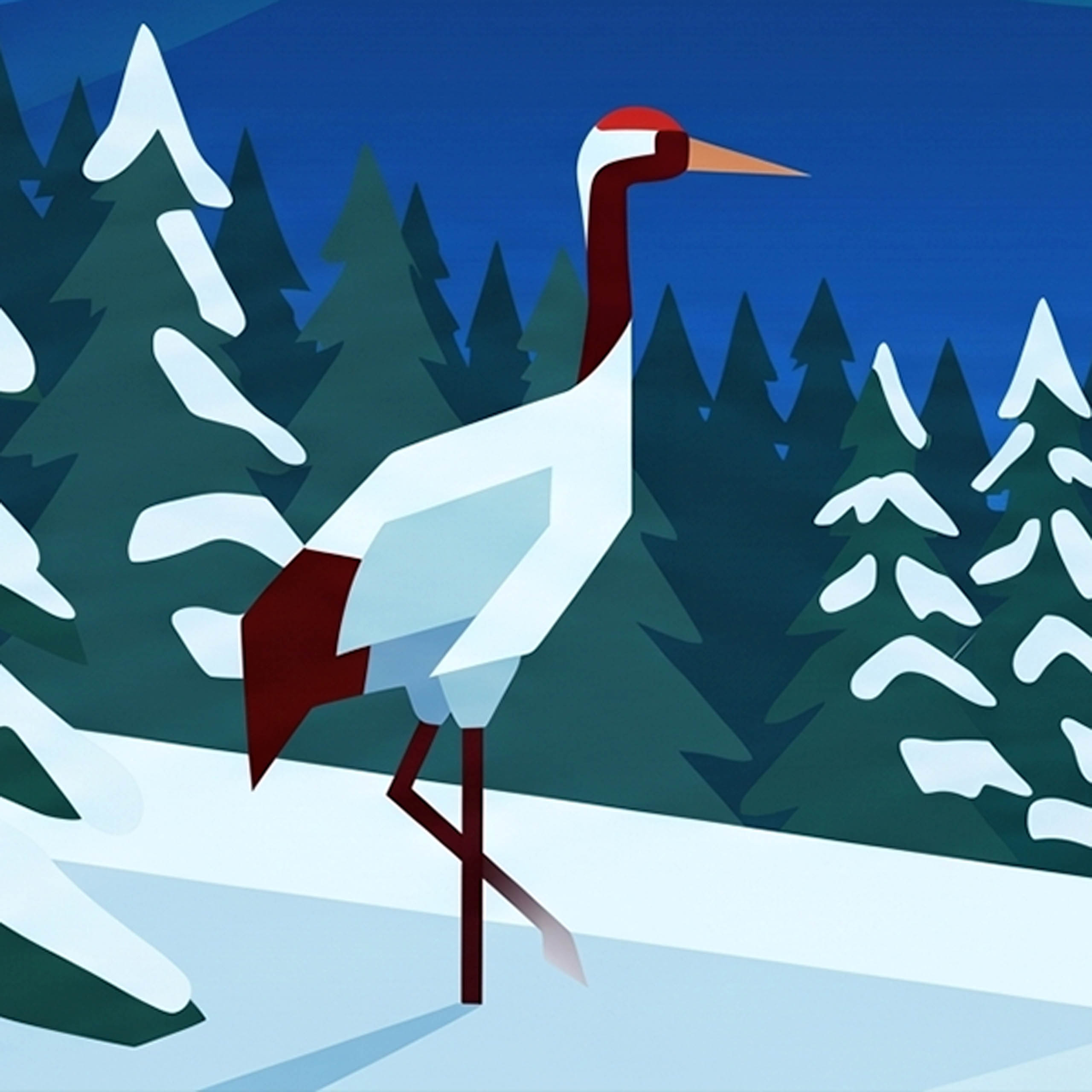
Tsuru the crane's tip: Japan is far south for aurora - Hokkaido sits at around 43° N geographic latitude. You need a G3 storm or stronger, Kp 7 and above, for any chance of seeing it from northern Hokkaido. The March 2015, September 2023, and May 2024 storms all produced aurora visible from Abashiri and Wakkanai. Solar maximum years, like 2024-2025, are the time to watch.
Best months for Japan (Wakkanai)
September, March and May average the most aurora nights. This latitude keeps usable darkness in every month, so no month counts zero, but the midwinter figures still sit below the equinox peaks. Even in the strongest months a Kp 7+ event reaching Hokkaido happens only a handful of times a year. The Okhotsk coast gives the clearest skies when one does.
Three ways to do it
Wakkanai
Japan's northernmost city, at about 45°N geographic latitude but only ~39° geomagnetic latitude, sits closer to the auroral oval than anywhere else in the country. Cape Soya, 30 km away, faces open sea to the north with no significant light pollution. Even so, aurora here takes a major storm: it appeared during the strongest events of the current solar maximum, such as the May 2024 G5 storm.
Threshold · Kp 7-8Rishiri Island
A volcanic island off Wakkanai with the cone of Rishiri-Fuji rising over Otatomari Pond. The crossing takes effort, but the island sits at the same ~40° geomagnetic latitude as Wakkanai and gives an open northern horizon over the Sea of Japan.
Threshold · Kp 7-8Shiretoko
A UNESCO World Heritage wilderness on the Okhotsk coast with Bortle 1-2 sky away from any town. The Five Lakes boardwalk and Utoro coastline give a dark, north-facing foreground for the rare nights when a major storm reaches this far south.
Threshold · Kp 8-9Why Japan stands out
Japan sits at the southern edge of where aurora can appear at all. Hokkaido, the northernmost main island, sits at roughly 42-45°N geographic latitude but only ~35-39° geomagnetic latitude - the latitude measured from Earth's magnetic poles, which is what actually decides where aurora reaches, and a low one. That puts it well outside the auroral oval under normal conditions. Aurora here needs a major geomagnetic storm. The Kp index, a global measure of geomagnetic activity from 0 (quiet) to 9 (extreme storm), needs to reach Kp 7-8 at best from Wakkanai in the far north, climbing to Kp 8-9 across the rest of the island, Hakodate in the south included. The main islands of Honshu, Shikoku and Kyushu are too far south to see aurora in all but the most extreme events on record.
This makes Japan a destination for storm-chasers rather than a place to plan a dedicated aurora trip around. Events are not nightly, or even weekly - they occur a handful of times a year during an active solar period, fewer in quieter years, and only when a coronal mass ejection or fast solar wind stream pushes Kp to 7 or above for several hours. The current solar maximum (2024-2026) has been one of the strongest in two decades and produced more aurora sightings from Hokkaido than at any point since Solar Cycle 23, including some visible as far south as Hakodate.
The practical approach is to treat Japan as a bonus rather than a target: visit Hokkaido for its own reasons - the national parks, the volcanic landscapes, the winter snow - and keep an eye on the space weather forecast during the trip. If a strong storm is called, Wakkanai, Rebun, Rishiri and the Okhotsk coast around Abashiri and Shiretoko are the places with the best chance of a clear, north-facing horizon.
Compare Japan locations tonight
Pre-filled with Japan's top spots - search 369 countries and towns worldwide to compare any of them side by side.
Up to 8 locations
How often does the aurora appear in Japan?
Average nights per month the Kp reached Wakkanai's threshold, from 15 years of geomagnetic data (2010–2024).
Counts the nights the Kp index reached Wakkanai's Kp 6 threshold, from 15 years of geomagnetic data (2010-2024). Cloud cover is not included, and the whole year averages under three qualifying nights - this is a rare event, not a seasonal certainty.
Plan your trip to Japan
Set expectations
This is not a destination to build a trip around. Visit Hokkaido for the landscapes and the season, and treat any Kp 7+ alert during your stay as a bonus worth chasing.
How to be ready
Keep the live Kp forecast open during an autumn or winter visit, and have Wakkanai, Rebun, Rishiri or the Okhotsk coast identified in advance so you can move quickly if a storm is called.
Related pages
Aurora Locations Worldwide
Global hub for all aurora forecast regions.
Read →Northern Lights Wakkanai Tonight
Wakkanai - Japan's northernmost city and best aurora position.
Read →Northern Lights Daisetsuzan Tonight
Daisetsuzan - Japan's largest national park, Asahidake ropeway.
Read →Northern Lights Sapporo Tonight
Sapporo - Hokkaido capital, aurora base with dark site access.
Read →Solar Maximum Aurora 2025-2026
Why the current solar maximum is the best chance for Japan aurora in a decade.
Read →Northern Lights Japan - Aurora Viewing Guide
Wakkanai, Abashiri, and Hokkaido - where to see the northern lights in Japan and what Kp you need.
Read →Aurora photographs from Japan
Real photos sourced from Wikimedia Commons.
 SCR-270 Radar Antenna
  SCR-270 Radar Antenna2
  SCR-270 Radar Antenna3
  ISS-45 Aurora and Stars From the Space Station's JEM Window
 Guides for visiting Japan
In-depth planning resources for your northern lights trip.
 Travel guide Japan
 Northern Lights Japan - Aurora Viewing Guide
Wakkanai, Abashiri, and Hokkaido - where to look and what Kp you need.
 Science Aurora science
 Solar Maximum Aurora 2025-2026
Why the current solar cycle is the best chance for Japan aurora in two decades.
 Planning All destinations
 How to Plan a Northern Lights Trip
Destination, timing, packing, expectations, and how to read a forecast.
 Science Aurora science
 What Is the Kp Index?
How the planetary index is measured, what the numbers mean, and when to act.
 Science Aurora science
 Kp 5 Aurora Locations
What Kp 5 means for aurora visibility worldwide.
 Location Wakkanai
 Northern Lights Wakkanai Tonight
Live forecast for Japan's best-positioned city - Kp threshold and outlook.