By month
Northern lights in May
High-latitude northern locations are not viable for aurora watching in May. From Svalbard and northern Norway down through Iceland, and across to Canada's aurora belt, astronomical darkness has disappeared or is reduced to a window too brief and too bright for aurora to show. The midnight sun arrives above 65°N before the month is out - the sky stays light around the clock regardless of how active the sun is. At lower northern latitudes like Scotland and Scandinavia's southern cities, persistent twilight keeps the night sky bright enough to wash out even strong aurora events.
No geomagnetic storm, however intense, can produce a visible aurora display without darkness. A Kp 9 extreme storm in May looks the same to a northern observer as a quiet night - the sky simply never gets dark enough to see it. The northern hemisphere aurora season is on hold from May through July.
May belongs entirely to the southern hemisphere. Every tier of southern location - from the highest magnetic latitudes in Patagonia and New Zealand's Stewart Island through to mid-latitude sites in Tasmania, Victoria, and South Africa's Sutherland - is in good condition this month. Southern winter nights are long and growing longer, geomagnetic activity shows no seasonal bias, and the aurora australis season is fully underway. If you are planning a dedicated aurora trip in May, destinations like Ushuaia, Queenstown, and Hobart are where to go.
Planning your trip in May
Weather
Southern hemisphere autumn and early winter. Ushuaia and Punta Arenas are cold with temperatures around 0°C to 5°C. Queenstown and Hobart are crisp and clear, with May offering some of the most stable weather of the year before the wettest winter months. Snow is rare at sea level in New Zealand and Tasmania but possible in Patagonia.
Darkness
No useful darkness at any northern hemisphere location. In the south, Ushuaia has around 14 hours of darkness. Stewart Island has 13 hours. Hobart and Queenstown have 12 to 13 hours. All well beyond what is needed for aurora watching.
Best regions
- Ushuaia, Argentina — The world's southernmost city sits at the highest magnetic latitude of any inhabited southern location. May nights are long and growing. The Beagle Channel to the south gives an open horizon. Cold but manageable.
- Stewart Island, New Zealand — Low light pollution and a clear southern horizon. Accessible from Invercargill. One of the few inhabited places outside the Antarctic where aurora australis is regularly visible without storm conditions.
- Queenstown, New Zealand — More infrastructure than Stewart Island with access to dark sites in the surrounding hills and Lake Wakatipu. A storm at Kp 4 or above brings aurora visible from dark sites near the city.
- Hobart, Tasmania — Mount Wellington provides dark-sky access within 30 minutes of the city centre. The Channel coast south of Hobart gives an open southern horizon. May is one of the most reliable aurora australis months for Tasmania.
Crowds & cost
May is a quieter travel month in most southern hemisphere aurora destinations. Ushuaia sees tourism but not at its winter-cruise peak. Queenstown is between its ski season ramp-up and summer. Hobart is calm. Prices are moderate. Accommodation is easy to find without booking months ahead.
Practical tip
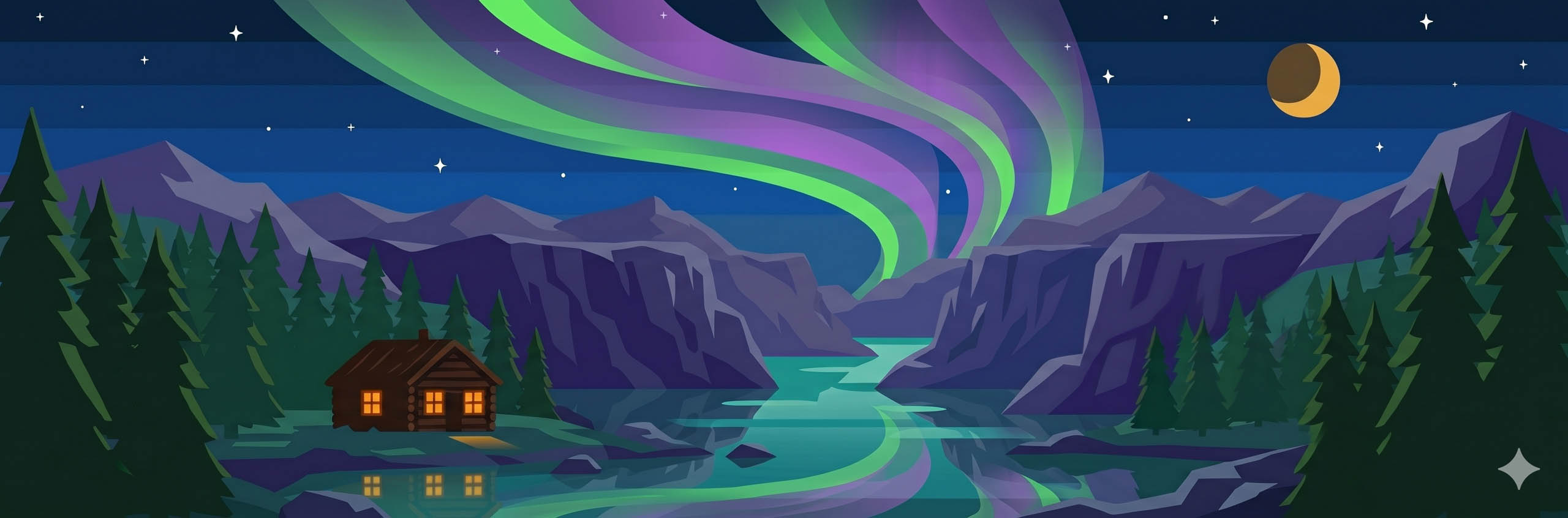
Aurora australis appears on the southern horizon from these locations, not the north. Keep clear sky to the south and minimise light pollution in that direction. A south-facing elevated site with no artificial lights to the south maximises visibility.
Current Kp level
Locations sorted by tonight's cloud cover within each group - clearest conditions first. Updated every 30 minutes.
No northern hemisphere locations this month
In May, persistent twilight or midnight sun prevents aurora observation at all northern latitudes. No storm level is strong enough to produce a visible display without astronomical darkness. The southern hemisphere locations below are your best option this month.
Southern hemisphere
Aurora australis locations visible in May. 23 in good condition.
Fiordland
Milford Sound, Doubtful Sound, Te Anau
58° magnetic lat
Lake Tekapo
Aoraki Mackenzie Dark Sky Reserve
56° magnetic lat
Stewart Island
Rakiura, NZ's southernmost inhabited island
59° magnetic lat
Ushuaia
World's southernmost city, Beagle Channel
55° magnetic lat
Dunedin
Otago Peninsula south coast
56° magnetic lat
Queenstown
Remarkables range, dark sky south of town
56° magnetic lat
Wānaka
Lone willow tree, Lake Wānaka
56° magnetic lat
Christchurch
Lake Tekapo Dark Sky Reserve nearby
55° magnetic lat
Cradle Mountain
Dove Lake, Tasmanian Wilderness World Heritage Area
54° magnetic lat
El Calafate
Perito Moreno Glacier, Lake Argentino
50° magnetic lat
Hobart
Tasmania, Australia's lowest aurora threshold
54° magnetic lat
Launceston
Northern Tasmania, Ben Lomond alpine dark sky
52° magnetic lat
Tasmania
Australia's best aurora state - Hobart, Cradle Mountain, Launceston
54° magnetic lat
Falls Creek
Victorian Alps, Bogong High Plains at 1 600 m
50° magnetic lat
Kangaroo Island
Remarkable Rocks, south coast dark sky
42° magnetic lat
Mount Gambier
South Australia, Canunda NP south coast
51° magnetic lat
South Australia
Coorong, Limestone Coast, Fleurieu Peninsula south coast
49° magnetic lat
Victoria
Wilsons Promontory, Great Ocean Road, Victorian Alps
50° magnetic lat
Western Australia
Albany, Esperance, Fitzgerald River NP south coast
47° magnetic lat
Cape Town
Cape Point, southernmost accessible tip
42° magnetic lat
Melbourne
Point Nepean and Wilson's Promontory
48° magnetic lat
New South Wales
Eden south coast, Sapphire Coast, Kosciuszko
45° magnetic lat
Sutherland
Karoo, SAAO site, darkest skies in SA
43° magnetic lat
No locations match your search.
Common questions
Northern lights viewing in May.