Northern lights in Alaska tonight
Alaska, USA · 65° magnetic latitude · Kp 1 threshold
Kp 1 is at the threshold for Alaska. Aurora may be visible from a dark site if cloud cover permits.
7-day outlook for Alaska
Based on CME arrival predictions from NASA DONKI. Arrival times ±6 hours.
auroratonight.space
What Kp is needed here?
Alaska sits at a magnetic latitude of approximately 65°N. The Kp index - a global measure of geomagnetic activity on a scale from 0 (quiet) to 9 (extreme storm), updated every 3 hours - needs to reach Kp 1 before the auroral oval expands far enough south to be visible from here.
At Kp 1, visibility is possible from Alaska but skies need to be clear and dark. Cloud cover and light pollution remain the main obstacles even when Kp is high enough.
Best dark sky sites near Alaska
Light pollution is the biggest obstacle after cloud cover. These sites give you the best dark northern horizon within reach.
Cleary Summit (Fairbanks area)
Get directions ↗About 30 km north of Fairbanks on the Steese Highway at 500 m elevation. The most accessible aurora viewing position from Fairbanks - above the city's light dome with an open north and northeast sky. Local photographers and aurora lodge guests use the pullout as a standard self-drive position. Bortle 2. The Steese Highway continues northeast through open tundra toward Circle giving additional dark positions. For the Fairbanks aurora scene, Cleary Summit is the equivalent of a reliable first stop.
Chena Hot Springs Resort (Fairbanks area)
Get directions ↗60 km east of Fairbanks in forested wilderness well away from city lights. The resort has geothermal hot spring pools open for aurora viewing - guests soak in water at 38-40°C while watching aurora overhead in air at -20 to -30°C. Heated aurora yurts and the Ice Museum are on site. Bortle 2. One of the most replicated aurora lodge experiences in Alaska, comparable to glass igloo operations in Scandinavia. Book well ahead in peak season (October-February).
Borealis Basecamp (Fairbanks area)
Get directions ↗About 30 km north of Fairbanks with heated aurora viewing pods positioned above the treeline. Guests sleep in pods connected to viewing platforms and can be woken when aurora appears. One of the most purpose-built aurora facilities in Alaska. The north-facing orientation and elevation above the valley floor give clean sky access at Bortle 2. The model follows Scandinavian aurora lodge design principles applied to the interior Alaska environment.
Hatcher Pass (Anchorage area)
Get directions ↗About 75 km north of Anchorage in the Talkeetna Mountains at 1050 m elevation. Above Anchorage's light dome with an open north-facing sky and the Alaska Range behind. The most accessible dark sky position for Anchorage-based aurora chasers - accessible in about 80 minutes via the Hatcher Pass Road from Palmer. Bortle 2. The pass gives elevated positions with the characteristic Alaska tundra-and-peak silhouette. South-central Alaska's primary self-drive aurora spot.
Denali National Park
Get directions ↗At 63°N geographic in the Alaska Range, Denali NP sits at the latitude midpoint between Anchorage and Fairbanks. The park's backcountry gives Bortle 1 conditions over millions of acres of roadless wilderness. The road corridor along the single 150 km park road gives accessible dark sky - bus tours and private vehicles (with permits) reach the park interior. Kp 1-2 from inside the park. The 6194 m peak provides a backdrop that on clear nights includes both aurora and the mountain silhouette.
Best time to see the northern lights in Alaska
At 65°N magnetic latitude, Alaska has one of the longest aurora seasons in the world. Meaningful darkness returns in late August and displays are possible on almost any clear night from September through March. Only the endless daylight of May, June, and July rules out viewing completely.
Activity peaks around the September and March equinoxes, when Earth's magnetic field geometry is most favourable for coupling with the solar wind. Events during these two windows tend to produce the strongest displays of the year for observers at Alaska's latitude.
May through July is effectively impossible for aurora viewing: the midnight sun keeps the sky bright around the clock at this latitude. No storm level, not even G5, can produce a visible display without astronomical darkness.
Other USA aurora forecasts
Up to 8 locations
Related pages
Northern Lights Fairbanks Tonight
Fairbanks - Alaska's aurora capital, Kp 1-2, inside the auroral oval.
Read →Northern Lights Anchorage Tonight
Anchorage - south-central Alaska, Kp 2-3 from Hatcher Pass.
Read →Northern Lights USA
USA-wide aurora forecast hub.
Read →Northern Lights Yellowknife Tonight
Yellowknife - Canada's aurora capital at the same magnetic latitude as Fairbanks.
Read →What Is the Kp Index?
Why Kp 1-2 is enough inside the auroral oval at ~65° geomagnetic latitude.
Read →Aurora photographs from Alaska
Real photos sourced from Wikimedia Commons.
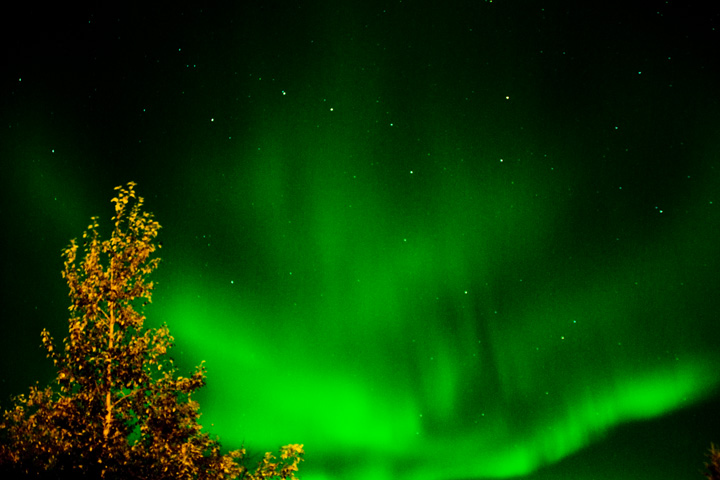 Aurora over Alaska
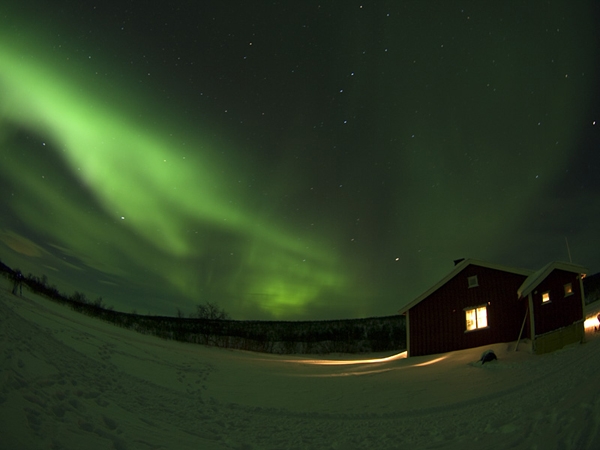 Aurora over Alaska
 Aurora over Alaska
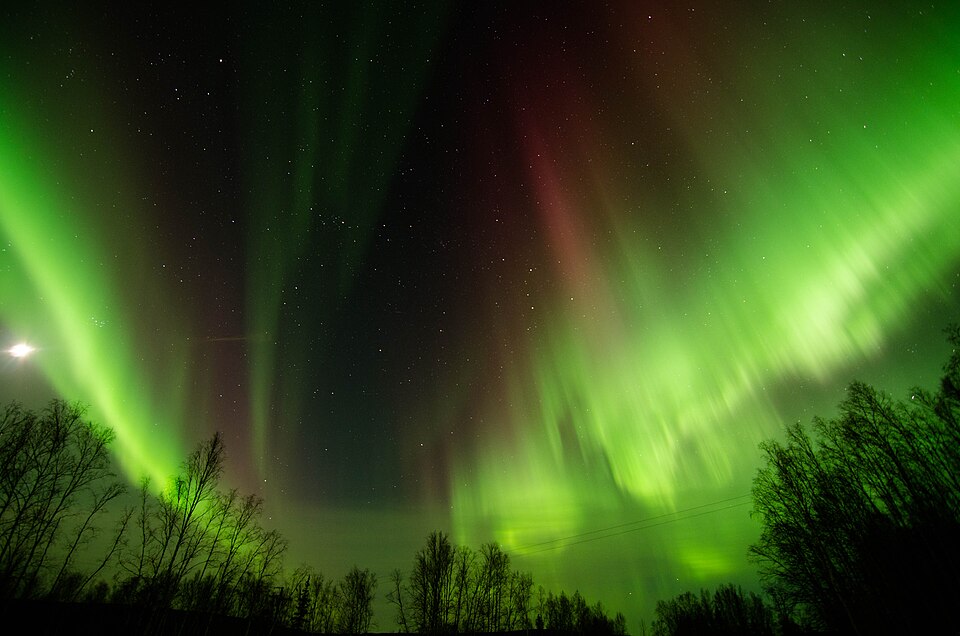 Aurora over Alaska
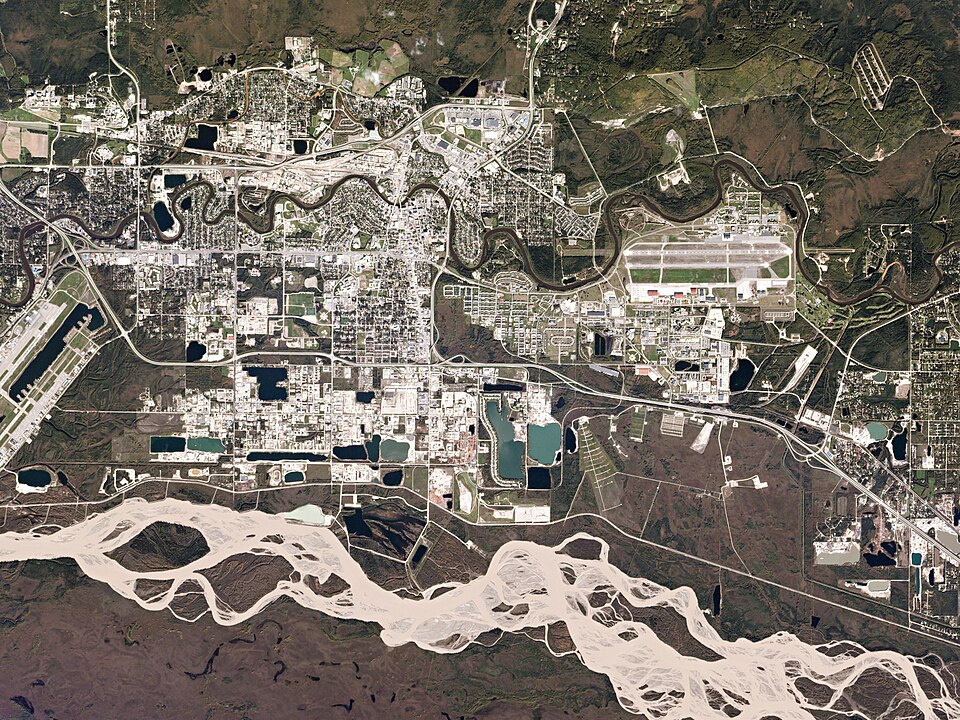 Aurora over Alaska
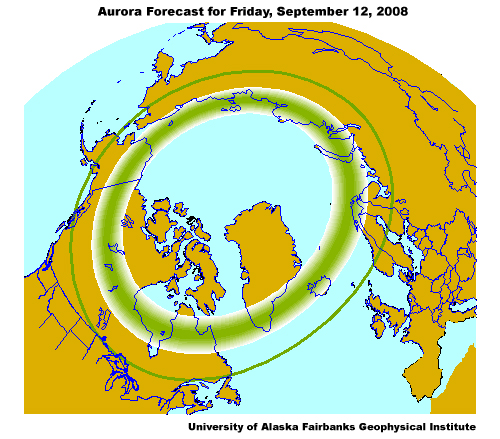 Aurora over Alaska
Planning your aurora trip
In-depth guides to help you plan a trip to see the northern lights.
 Travel GuideAll destinations
How to Plan a Northern Lights Trip
Destination, timing, accommodation, app setup, and how to read a space weather forecast.
 PlanningAll destinations
Best Time to See the Northern Lights
Month-by-month breakdown of aurora probability, darkness windows, and weather patterns.
 Travel GuideAll destinations
Northern Lights Bucket List
The experiences worth planning around - from Jökulsárlón to Svalbard polar night.