Northern lights in Leknes tonight
Vestvågøy, Lofoten Islands, Northern Norway · 65° magnetic latitude · Kp 2 threshold
Kp 1 is below the threshold for Leknes. Activity would need to rise to Kp 2 before aurora could reach this latitude.
7-day outlook for Leknes
Tonight shows the live Kp reading. The nights after it show the Kp expected from any coronal mass ejection DONKI predicts will arrive that day, and a quiet baseline of Kp 2 where no arrival is forecast.
Based on CME arrival predictions from NASA DONKI. Arrival times ±6 hours.
auroratonight.space
What Kp is needed here?
Leknes sits at a magnetic latitude of approximately 65°N. The Kp index - a global measure of geomagnetic activity on a scale from 0 (quiet) to 9 (extreme storm), updated every 3 hours - needs to reach Kp 2 before the auroral oval expands far enough south to be visible from here.
At Kp 2, visibility is possible from Leknes but skies need to be clear and dark. Cloud cover and light pollution remain the main obstacles even when Kp is high enough.
Best dark sky sites near Leknes
Light pollution is the biggest obstacle after cloud cover. These sites give you the best dark northern horizon within reach.
Unstad beach
Get directions ↗Unstad is on the north coast of Vestvågøy, known primarily as a surf beach but equally useful as an aurora position. The beach faces north-northwest over the open Norwegian Sea with no land between it and the Arctic. Bortle Class 1-2. The beach is backed by steep valley walls which block any residual light from Leknes or Stamsund. At night the position is fully dark with a wide northern horizon over the sea. Access requires a drive across Vestvågøy on the Fv815 and then a single-track valley road to the coast. The road is sealed but narrow - take care in winter with oncoming vehicles. Parking at the beach. This is the darkest easily accessible position in the Leknes area.
Eggum, north coast Vestvågøy
Get directions ↗Eggum is a small village on the north coast of Vestvågøy with a lighthouse and a sculpture park along the cliff path. The headland positions give an open Arctic Ocean horizon facing north and northwest. Bortle Class 1-2. The area is less visited than Haukland and Utakleiv beaches and tends to be quieter at night. The cliff path north of the village gives elevated positions above sea level with views along the coast and out to sea. A practical dark sky position for those based in Leknes who want to avoid the more popular beach car parks.
Haukland and Utakleiv beaches
Get directions ↗Haukland and Utakleiv are adjacent beaches on the northwest coast of Vestvågøy, connected by a short cliff path. Both face north over the open sea. Bortle Class 2 from the beach. Haukland is accessible directly from the road; Utakleiv requires a short walk around the headland. The beaches have become popular with photographers for their combination of white sand and mountain backdrop - the Vestvågøy peaks rise directly behind. In winter the car park at Haukland is ploughed and accessible. Both positions give a Kp 2 aurora clearly above the dark northern horizon.
Best time to see the northern lights in Leknes
At 65°N magnetic latitude, Leknes has one of the longest aurora seasons in the world. Meaningful darkness returns in late August and displays are possible on almost any clear night from September through March. Only the endless daylight of May, June, and July rules out viewing completely.
Activity peaks around the September and March equinoxes, when Earth's magnetic field geometry is most favourable for coupling with the solar wind. Events during these two windows tend to produce the strongest displays of the year for observers at Leknes's latitude.
May through July is effectively impossible for aurora viewing: the midnight sun keeps the sky bright around the clock at this latitude. No storm level, not even G5, can produce a visible display without astronomical darkness.
Up to 8 locations
How often does the aurora appear in Leknes?
Average nights per month the Kp reached Leknes's threshold of 2+, from 15 years of geomagnetic data (2010–2024).
Counts the Kp 2+ threshold only - cloud cover and local darkness are not included.
Kp data: GFZ German Research Centre for Geosciences, CC BY 4.0
Plan your trip to Leknes
Best window
The January to March window averages 72 aurora nights - the strongest consecutive stretch of the year.
How long to stay
For your best chance in March, plan at least 1 night.
Related pages
Northern Lights Norway
Norway-wide aurora forecast and location hub.
Read →Northern Lights Lofoten Tonight
Lofoten Islands - full overview with Kp 2 threshold.
Read →Northern Lights Svolvær Tonight
Svolvær - Lofoten hub and transport centre, 50 km east.
Read →Northern Lights Reine Tonight
Reine - Moskenesøya peaks and Kirkefjord, 60 km west.
Read →Northern Lights in Norway Guide
Complete guide to seeing the northern lights in Norway.
Read →What Is the Kp Index?
Why Kp 2 is enough at 65°N magnetic latitude.
Read →Planning your aurora trip
In-depth guides to help you plan a trip to see the northern lights.
 Travel GuideNorway
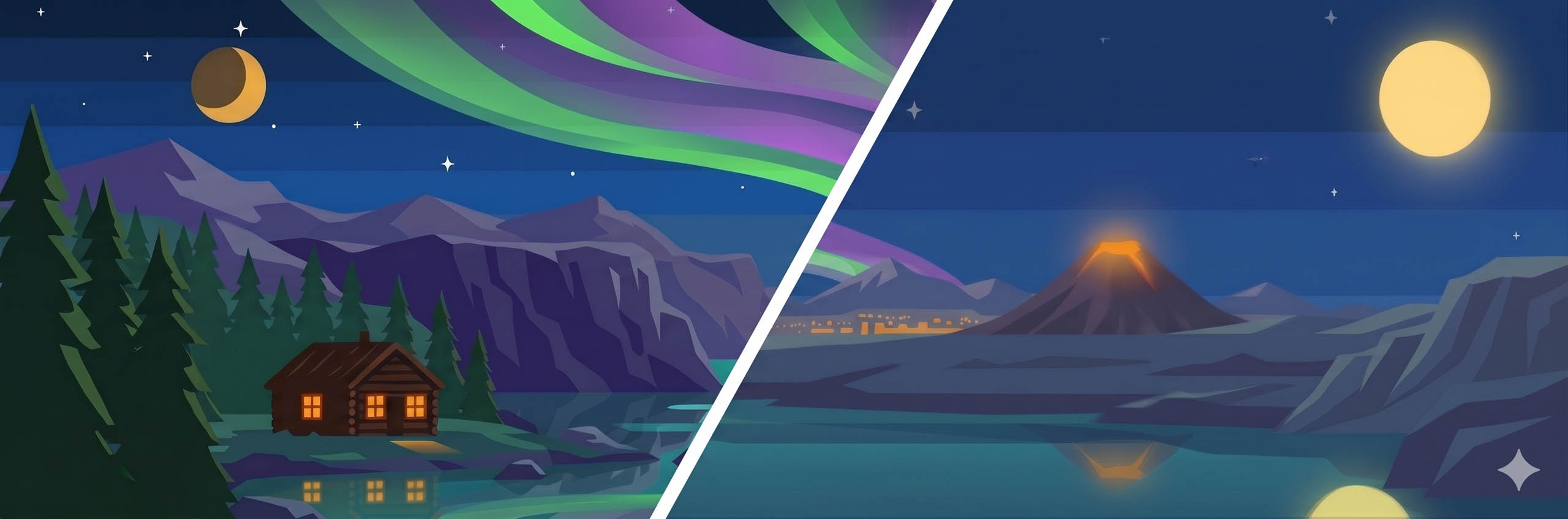
Norway vs Iceland - Which is Better for Northern Lights?
Real probability by trip length, plus latitude, weather patterns, landscapes, cost, and accessibility compared head to head.
 ComparisonNorway
Hurtigruten vs Havila - Same Route, Different Promise
Two operators, one Norwegian coastal route, and two northern lights promises written differently - plus cabin sizes, ship ages, and live conditions at every port.
 Travel GuideNorway
Northern Lights Norway - Complete Travel Guide
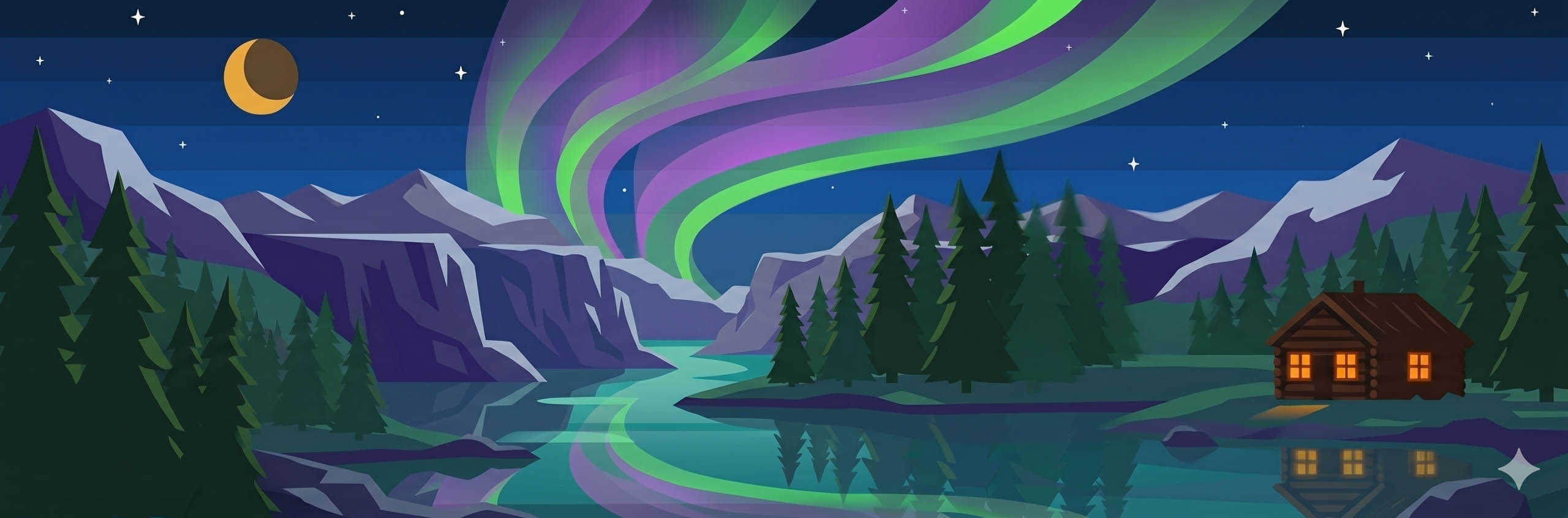
Tromsø, Lofoten, Svalbard, and the rest - planning a Norway aurora trip from scratch.