Northern lights in Texas tonight
Texas, USA · 42° magnetic latitude · Kp 7-8 threshold
Kp 1 is well below the Kp 7-8 threshold needed for aurora to be visible from Texas.
7-day outlook for Texas
Based on CME arrival predictions from NASA DONKI. Arrival times ±6 hours.
auroratonight.space
What Kp is needed here?
Texas sits at a magnetic latitude of approximately 42°N. The Kp index - a global measure of geomagnetic activity on a scale from 0 (quiet) to 9 (extreme storm), updated every 3 hours - needs to reach Kp 7-8 before the auroral oval expands far enough south to be visible from here.
At Kp 7-8, visibility is possible from Texas but skies need to be clear and dark. Cloud cover and light pollution remain the main obstacles even when Kp is high enough.
Best dark sky sites near Texas
Light pollution is the biggest obstacle after cloud cover. These sites give you the best dark northern horizon within reach.
McDonald Observatory / Davis Mountains
Get directions ↗The McDonald Observatory sits at 2070 m in the Davis Mountains of west Texas - one of the darkest skies in the continental USA. The International Dark Sky Park designation covers the surrounding region. At 30.7°N geographic the latitude is low, but the darkness is exceptional. Only the strongest storms reach this far south, and when they do the aurora shows as a glow above the northern horizon from the observatory plateau. The Star Party programme at McDonald runs nightly.
Big Bend National Park
Get directions ↗The most remote national park in the lower 48, with Bortle 1 sky over a vast desert. At 29°N geographic the latitude is low - aurora here takes a major-to-extreme storm and is a rare event that occurs only a handful of times per solar cycle. The Chisos Basin and the Rio Grande floodplain give outstanding sky photography conditions. For aurora, the northern horizon above the park plateau is the target direction.
Caprock Canyons State Park / Texas Panhandle
Get directions ↗The Texas Panhandle at 34-36°N geographic gives the state's best latitude for aurora, sitting marginally farther north than Dallas. Caprock Canyons near Quitaque gives Bortle 2 conditions with the canyon rims facing north across open plains. Even here it takes a major-to-extreme storm for aurora to show, low on the northern horizon. The flat plains give an unobstructed northern horizon.
Palo Duro Canyon / Amarillo area
Get directions ↗The "Grand Canyon of Texas" sits in the southern Panhandle with canyon walls as a striking foreground for aurora photography. The plateau above the canyon faces north across open plains. Amarillo at 35.2°N geographic sits marginally farther north than Dallas, a slight edge but still well south of the aurora zone. Rural roads north of Amarillo toward Dumas give flat plains dark sky with any glow appearing low to the north.
Best time to see the northern lights in Texas
At 42°N magnetic latitude, Texas sits at the lower end of regular aurora territory. Only the deep mid-winter months of November through January offer nights dark enough for aurora to be visible, and only then when a significant geomagnetic storm pushes the auroral oval this far south.
Activity peaks around the September and March equinoxes, when Earth's magnetic field geometry is most favourable for coupling with the solar wind. Events during these two windows tend to produce the strongest displays of the year for observers at Texas's latitude.
Outside November through January, twilight is too bright for aurora viewing even during significant storms. The season is short, but the equinox months on either side of winter can extend it slightly when storm timing aligns.
Related pages
USA Aurora Overview
State-by-state aurora forecast and Kp thresholds across the United States.
Read →Oklahoma Aurora Forecast
Aurora forecast for Oklahoma, including Black Mesa and the Wichita Mountains.
Read →Colorado Aurora Forecast
Aurora forecast for Colorado with Rocky Mountain dark sky sites.
Read →Kansas Aurora Forecast
Aurora forecast for Kansas with open plains dark sky viewing.
Read →Kp Index Guide
What the Kp index means and how to use it to plan aurora viewing.
Read →Aurora photographs from Texas
Real photos sourced from Wikimedia Commons.
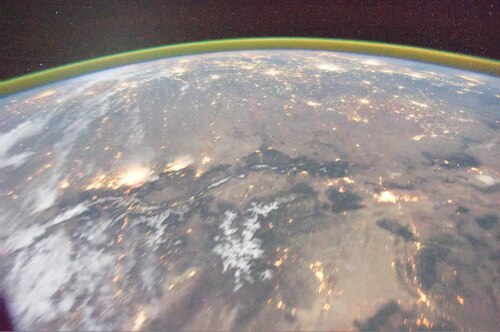 Aurora over Texas
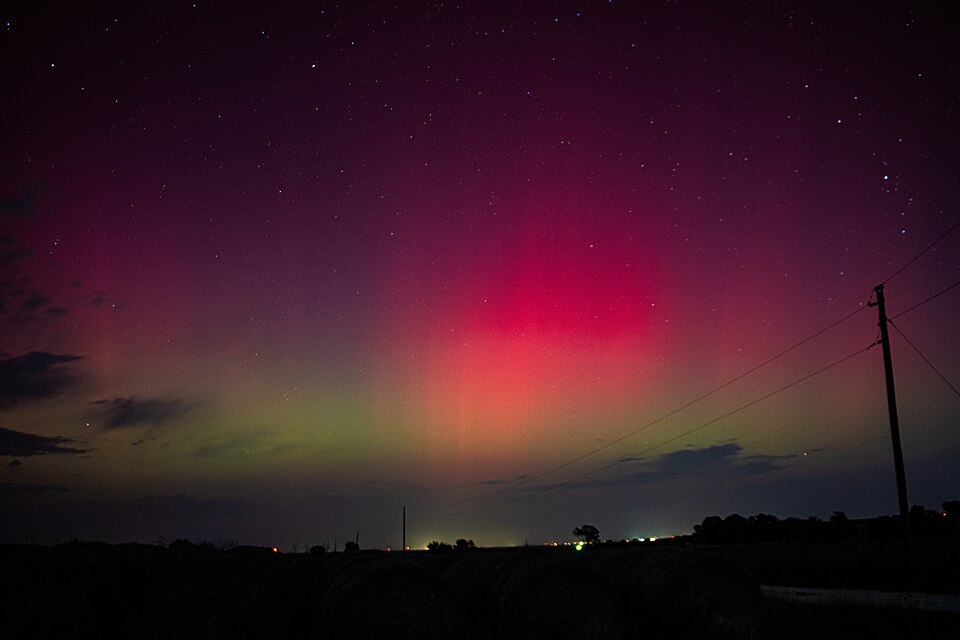 Aurora over Texas
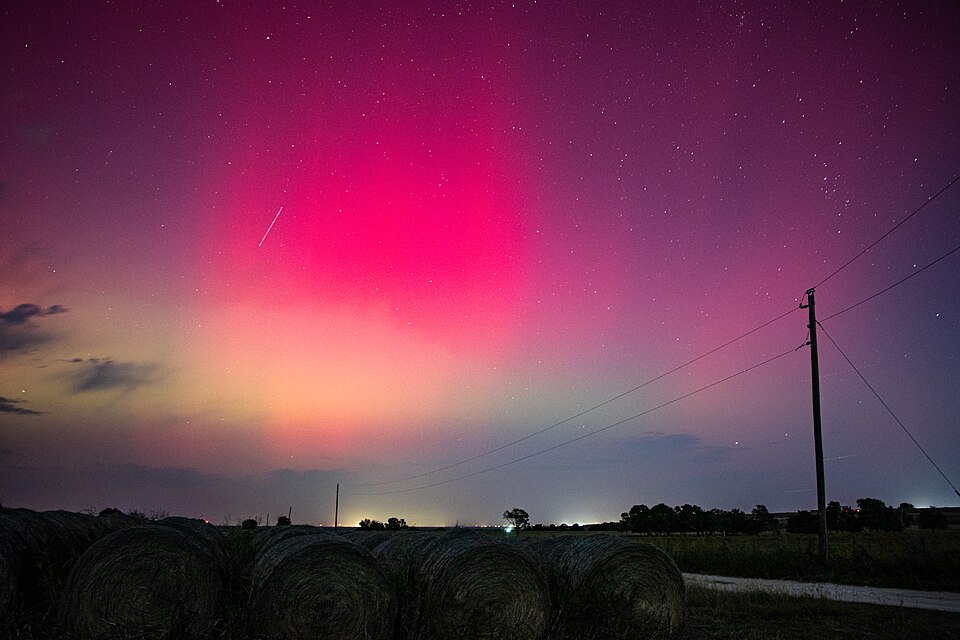 Aurora over Texas
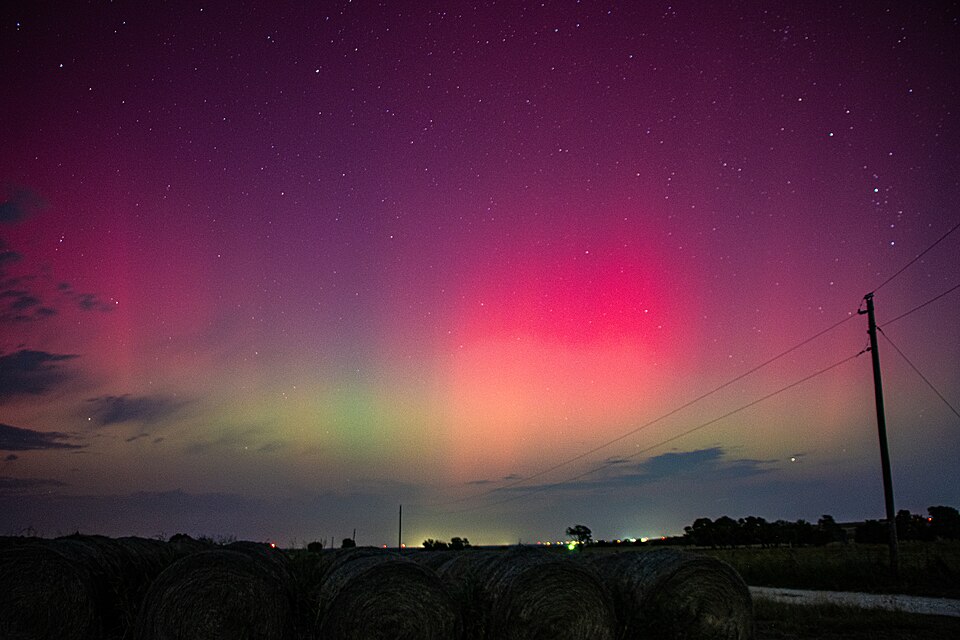 Aurora over Texas
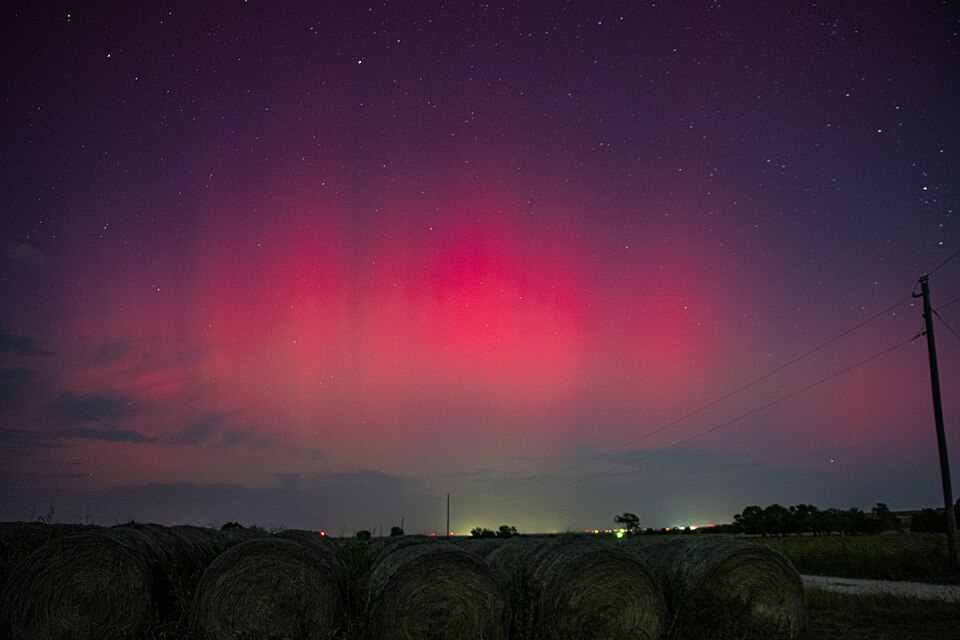 Aurora over Texas
Planning your aurora trip
In-depth guides to help you plan a trip to see the northern lights.
 Travel GuideAll destinations
How to Plan a Northern Lights Trip
Destination, timing, accommodation, app setup, and how to read a space weather forecast.
 PlanningAll destinations
Best Time to See the Northern Lights
Month-by-month breakdown of aurora probability, darkness windows, and weather patterns.
 Travel GuideAll destinations
Northern Lights Bucket List
The experiences worth planning around - from Jökulsárlón to Svalbard polar night.