Northern lights in Vancouver tonight
British Columbia, Canada · 54° magnetic latitude · Kp 5 threshold
Kp 6 is at the threshold for Vancouver. Aurora may be visible from a dark site if cloud cover permits.
7-day outlook for Vancouver
Based on CME arrival predictions from NASA DONKI. Arrival times ±6 hours.
auroratonight.space
What Kp is needed here?
Vancouver sits at a magnetic latitude of approximately 54°N. The Kp index - a global measure of geomagnetic activity on a scale from 0 (quiet) to 9 (extreme storm), updated every 3 hours - needs to reach Kp 5 before the auroral oval expands far enough south to be visible from here.
At Kp 5, visibility is possible from Vancouver but skies need to be clear and dark. Cloud cover and light pollution remain the main obstacles even when Kp is high enough.
Best dark sky sites near Vancouver
Light pollution is the biggest obstacle after cloud cover. These sites give you the best dark northern horizon within reach.
Golden Ears Provincial Park
Get directions ↗Golden Ears Provincial Park sits in the Fraser Valley foothills with Bortle 3 skies well away from the Metro Vancouver light dome. The main campground clearing and the trailhead parking areas give open north-facing sky above the tree line. The park is accessible year-round and the drive from Vancouver is straightforward on Highway 7. On a Kp 5 night, aurora arcs become visible above the northern ridge. The high ridges of the park itself can be accessed in summer for even darker conditions above the valley inversion layer.
Manning Provincial Park - Lightning Lake
Get directions ↗Manning Provincial Park in the Cascade Mountains east of Hope gives Bortle 2 sky conditions well beyond the Metro Vancouver light dome. Lightning Lake at the park centre faces north with an open meadow and water foreground. The park road is maintained in winter for ski access. On Kp 5 nights, aurora is clearly visible above the northern ridge from the lake shore. A 2.5-hour drive from Vancouver makes this a target for reliable Kp 5+ forecast nights rather than marginal events.
Cypress Mountain - North Shore
Get directions ↗The Cypress Mountain access road climbs above the North Shore light dome and gives a northern horizon across Howe Sound toward the Squamish highlands. Sky brightness here remains Bortle 4 due to proximity to Metro Vancouver, but the elevation and north-facing geometry makes aurora visible at lower Kp than from the city floor. On a Kp 5+ night, this is the fastest option from central Vancouver. The parking areas near the ski lodge have good north-facing sky for the strength of event they are suited to.
Best time to see the northern lights in Vancouver
At 54°N magnetic latitude, Vancouver sits at the lower end of regular aurora territory. Only the deep mid-winter months of November through January offer nights dark enough for aurora to be visible, and only then when a significant geomagnetic storm pushes the auroral oval this far south.
Activity peaks around the September and March equinoxes, when Earth's magnetic field geometry is most favourable for coupling with the solar wind. Events during these two windows tend to produce the strongest displays of the year for observers at Vancouver's latitude.
Outside November through January, twilight is too bright for aurora viewing even during significant storms. The season is short, but the equinox months on either side of winter can extend it slightly when storm timing aligns.
Up to 8 locations
How often does the aurora appear in Vancouver?
Average nights per month the Kp reached Vancouver's threshold of 5+, from 15 years of geomagnetic data (2010–2024).
Counts the Kp 5+ threshold only - cloud cover and local darkness are not included.
Kp data: GFZ German Research Centre for Geosciences, CC BY 4.0
Plan your trip to Vancouver
Best window
The August to October window averages 4 aurora nights - the strongest consecutive stretch of the year.
How long to stay
Aurora at this latitude requires patience - allow as many nights as possible during March.
Related pages
Northern Lights Canada
Canada-wide aurora forecast hub.
Read →Northern Lights Tofino Tonight
Tofino - Pacific Rim dark sky on Vancouver Island.
Read →Northern Lights Prince George Tonight
Prince George - northern BC boreal dark sky.
Read →Northern Lights Edmonton Tonight
Edmonton - 62°N magnetic, Kp 2-3 from Elk Island.
Read →What Is the Kp Index?
How Kp determines aurora visibility at 54° geomagnetic latitude.
Read →Aurora photographs from Vancouver
Real photos sourced from Wikimedia Commons.
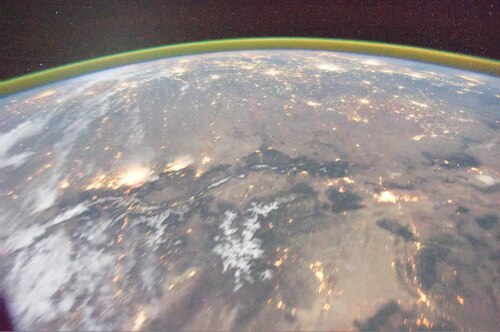 Aurora over Vancouver
 Aurora over Vancouver
 Aurora over Vancouver
Planning your aurora trip
In-depth guides to help you plan a trip to see the northern lights.
 Travel GuideCanada
Northern Lights Canada - Complete Travel Guide
Yukon, Northwest Territories, Manitoba - where to go and when the aurora is strongest.
 Travel GuideAll destinations
How to Plan a Northern Lights Trip
Destination, timing, accommodation, app setup, and how to read a space weather forecast.
 PlanningAll destinations
Best Time to See the Northern Lights
Month-by-month breakdown of aurora probability, darkness windows, and weather patterns.