Northern lights in Ohio tonight
Ohio, USA · 49° magnetic latitude · Kp 6 threshold
Kp 1 is well below the Kp 6 threshold needed for aurora to be visible from Ohio.
7-day outlook for Ohio
Based on CME arrival predictions from NASA DONKI. Arrival times ±6 hours.
auroratonight.space
What Kp is needed here?
Ohio sits at a magnetic latitude of approximately 49°N. The Kp index - a global measure of geomagnetic activity on a scale from 0 (quiet) to 9 (extreme storm), updated every 3 hours - needs to reach Kp 6 before the auroral oval expands far enough south to be visible from here.
At Kp 6, visibility is possible from Ohio but skies need to be clear and dark. Cloud cover and light pollution remain the main obstacles even when Kp is high enough.
Best dark sky sites near Ohio
Light pollution is the biggest obstacle after cloud cover. These sites give you the best dark northern horizon within reach.
Hocking Hills State Park area
Get directions ↗The gorges and forests of Hocking County give dark sky in the rolling Appalachian foothills. Ridge-top positions above the gorges face north with minimal nearby development. The Ash Cave and Old Man's Cave areas give accessible cleared sky from the rim. About 65 miles from Columbus via US-33. Bortle 3-4 from the ridge positions.
Seneca Lake / Muskingum Watershed
Get directions ↗Noble and Guernsey counties in eastern Ohio sit on the western Appalachian plateau with Bortle 3 conditions. The reservoir area gives an open water horizon. Rural roads along the Muskingum Watershed give north-facing positions away from town light domes. About 100 miles from Columbus.
East Harbour State Park / Lake Erie shore
Get directions ↗The Lake Erie shoreline at 41.5°N geographic sits higher in latitude than Columbus and faces north across open water. East Harbour State Park near Marblehead gives north-facing beach positions. The lake horizon extends the northern view without obstruction - useful for picking up low aurora arcs. About 100 miles from Columbus and 35 miles from Toledo.
Wayne National Forest (southeast Ohio)
Get directions ↗The Burr Oak and Buckhorn areas of Wayne National Forest give Bortle 3 sky in the Appalachian foothills with ridge positions facing north. More southerly than the Lake Erie shore but genuinely darker overall. About 110 miles from Columbus.
Best time to see the northern lights in Ohio
At 49°N magnetic latitude, Ohio sits at the lower end of regular aurora territory. Only the deep mid-winter months of November through January offer nights dark enough for aurora to be visible, and only then when a significant geomagnetic storm pushes the auroral oval this far south.
Activity peaks around the September and March equinoxes, when Earth's magnetic field geometry is most favourable for coupling with the solar wind. Events during these two windows tend to produce the strongest displays of the year for observers at Ohio's latitude.
Outside November through January, twilight is too bright for aurora viewing even during significant storms. The season is short, but the equinox months on either side of winter can extend it slightly when storm timing aligns.
Up to 8 locations
Related pages
Northern Lights USA
USA-wide aurora forecast hub.
Read →Northern Lights Indiana Tonight
Indiana - similar latitude, Indiana Dunes on Lake Michigan.
Read →Northern Lights Pennsylvania Tonight
Pennsylvania - Cherry Springs State Park, Kp 6.
Read →Northern Lights Michigan Tonight
Michigan Upper Peninsula - darker and higher latitude.
Read →What Is the Kp Index?
What Kp 6 means for viewing at around 49° geomagnetic latitude.
Read →Aurora photographs from Ohio
Real photos sourced from Wikimedia Commons.
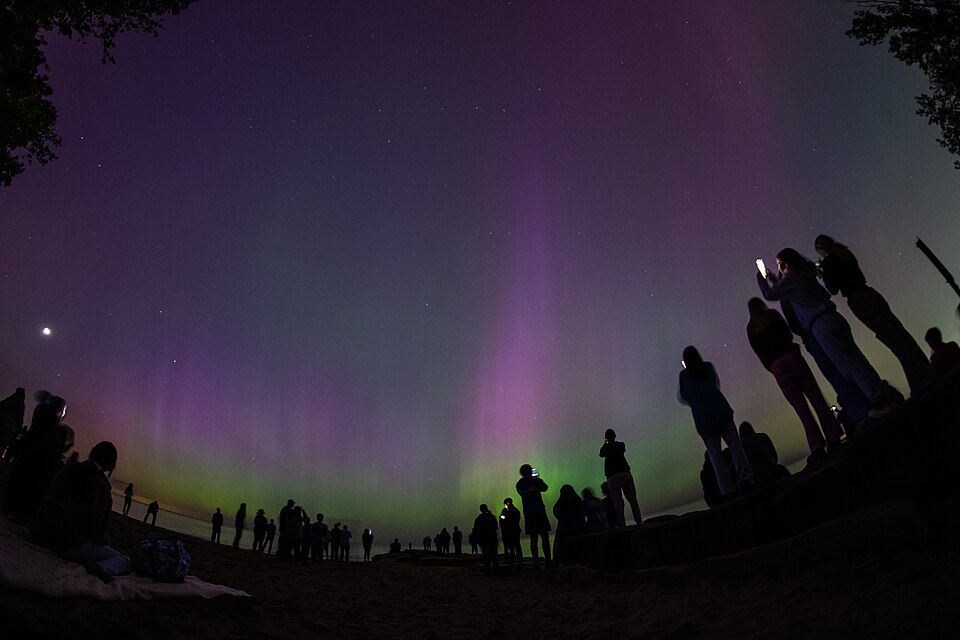 Aurora over Ohio
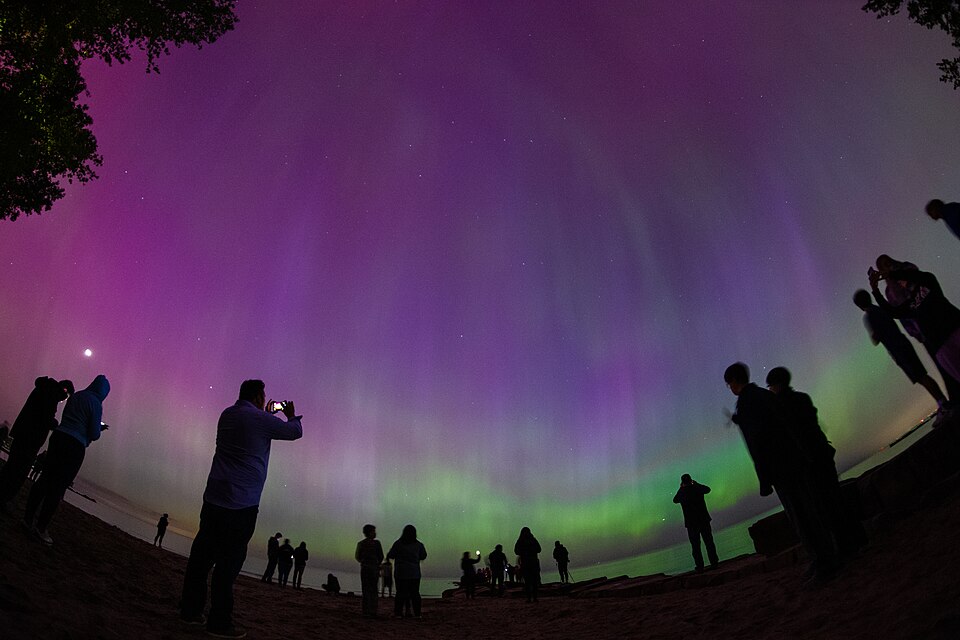 Aurora over Ohio
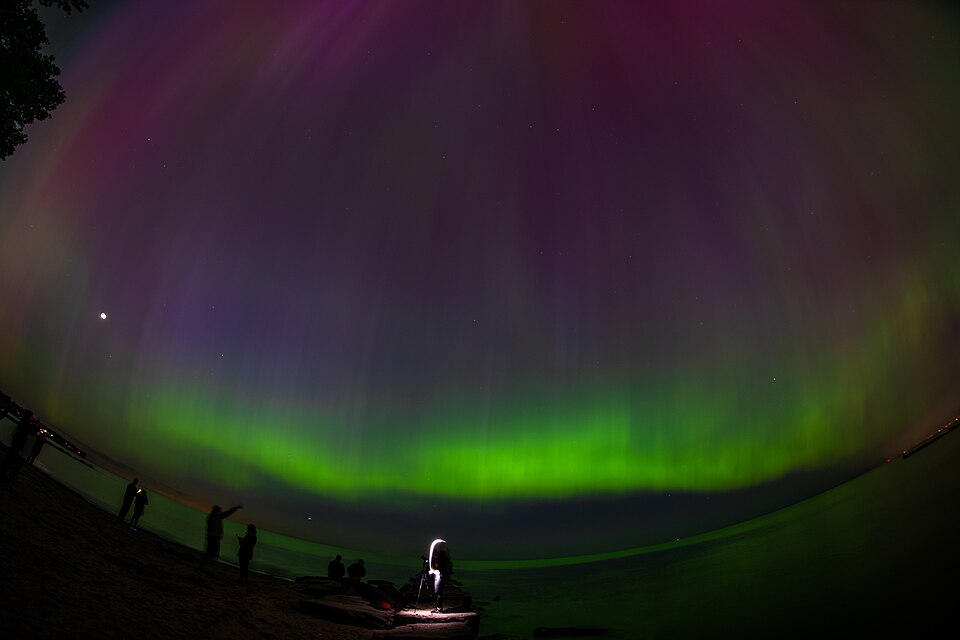 Aurora over Ohio
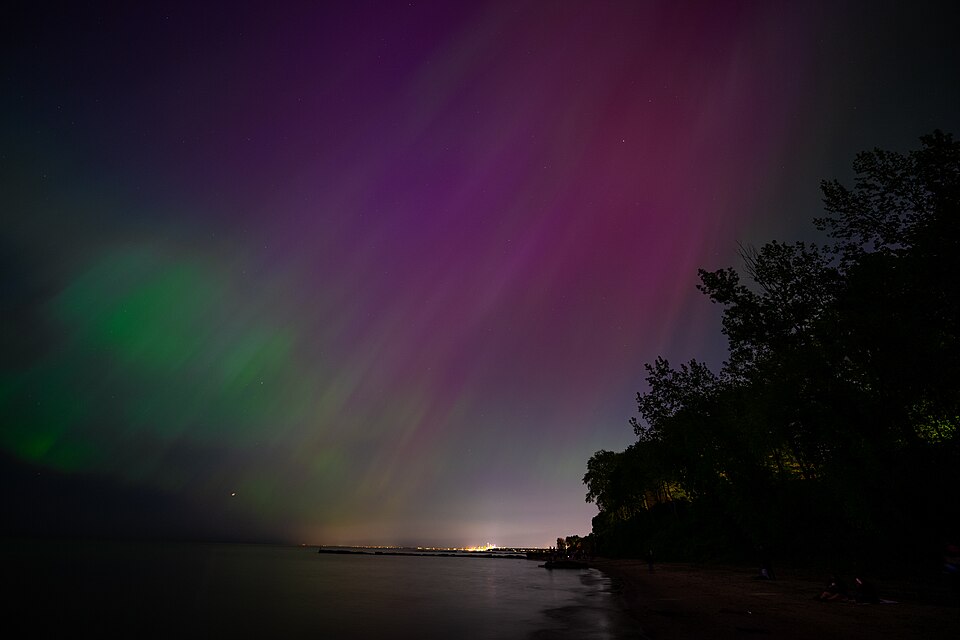 Aurora over Ohio
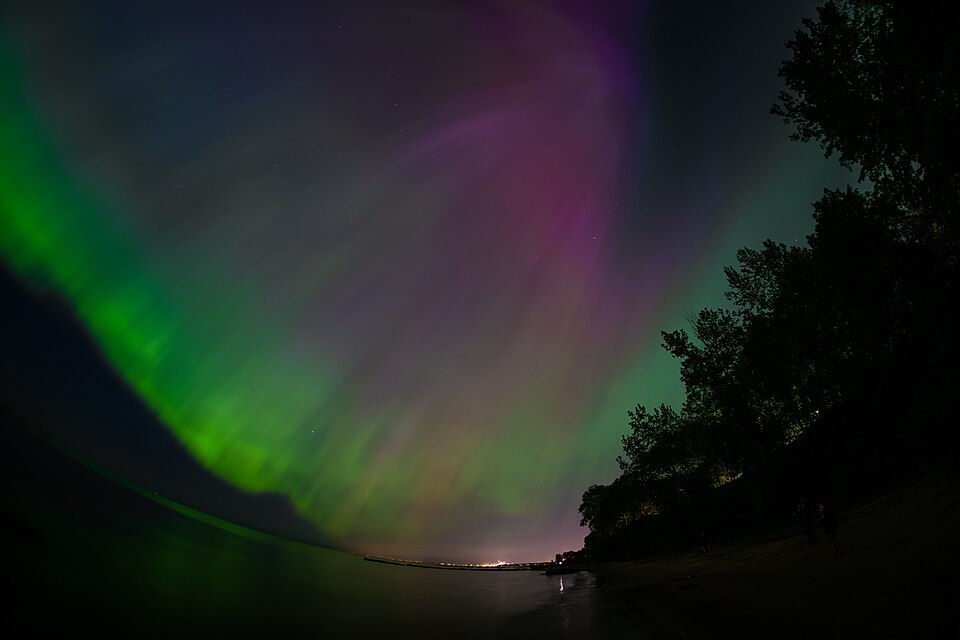 Aurora over Ohio
 Aurora over Ohio
Planning your aurora trip
In-depth guides to help you plan a trip to see the northern lights.
 Travel GuideAll destinations
How to Plan a Northern Lights Trip
Destination, timing, accommodation, app setup, and how to read a space weather forecast.
 PlanningAll destinations
Best Time to See the Northern Lights
Month-by-month breakdown of aurora probability, darkness windows, and weather patterns.
 Travel GuideAll destinations
Northern Lights Bucket List
The experiences worth planning around - from Jökulsárlón to Svalbard polar night.