Northern lights in Yellowstone tonight
Northern Wyoming/Montana, USA · 51° magnetic latitude · Kp 5-6 threshold
Kp 1 is well below the Kp 5-6 threshold needed for aurora to be visible from Yellowstone.
7-day outlook for Yellowstone
Based on CME arrival predictions from NASA DONKI. Arrival times ±6 hours.
auroratonight.space
What Kp is needed here?
Yellowstone sits at a magnetic latitude of approximately 51°N. The Kp index - a global measure of geomagnetic activity on a scale from 0 (quiet) to 9 (extreme storm), updated every 3 hours - needs to reach Kp 5-6 before the auroral oval expands far enough south to be visible from here.
At Kp 5-6, visibility is possible from Yellowstone but skies need to be clear and dark. Cloud cover and light pollution remain the main obstacles even when Kp is high enough.
Best dark sky sites near Yellowstone
Light pollution is the biggest obstacle after cloud cover. These sites give you the best dark northern horizon within reach.
Lamar Valley
Get directions ↗Known as "America's Serengeti" for its wildlife, Lamar Valley is also one of the best aurora positions in the park - a wide, flat, north-facing valley at 2000 m elevation with no light pollution for 80 km in any direction. Reachable year-round via the North Entrance.
Mammoth Hot Springs area
Get directions ↗The only developed area of the park kept open to regular vehicles year-round, alongside the Mammoth-Tower-Lamar-Cooke City road corridor. A practical winter base with genuinely dark sky just outside the small developed area.
Old Faithful / Hayden Valley (summer and shoulder season only)
Get directions ↗Some of the park's most famous dark-sky terrain, but only reachable by regular vehicle from late spring to autumn - most interior roads, including access to this area, close to cars from roughly mid-November to mid-March and are snowcoach or snowmobile access only in winter. Worth targeting for a shoulder-season trip rather than the depths of winter.
Best time to see the northern lights in Yellowstone
At 51°N magnetic latitude, Yellowstone sits at the lower end of regular aurora territory. Only the deep mid-winter months of November through January offer nights dark enough for aurora to be visible, and only then when a significant geomagnetic storm pushes the auroral oval this far south.
Activity peaks around the September and March equinoxes, when Earth's magnetic field geometry is most favourable for coupling with the solar wind. Events during these two windows tend to produce the strongest displays of the year for observers at Yellowstone's latitude.
Outside November through January, twilight is too bright for aurora viewing even during significant storms. The season is short, but the equinox months on either side of winter can extend it slightly when storm timing aligns.
Other USA aurora forecasts
Up to 8 locations
This page contains affiliate links to tour operators and products on Amazon. If you book or buy through one of these links, I may earn a small commission at no extra cost to you. This doesn't influence which operators or products are featured, or what the forecast shows.
One of the largest dark-sky areas in the lower 48 - with a real winter access caveat
Yellowstone spans parts of Wyoming, Montana, and Idaho, and its combination of remoteness, elevation, and minimal development makes it one of the darkest large areas in the contiguous United States, official Dark Sky certification aside (the park has said it's working toward it, but isn't there yet). The catch for aurora watchers specifically interested in winter's long nights: most of the park's interior roads close to regular vehicles from mid-November to mid-March, snowcoach and snowmobile access only.
When to go
Aurora here is storm-driven rather than seasonal - it depends on a Kp 5-6 event reaching this latitude, which can happen at any time of year. Winter's real advantage is longer dark nights, but road access is the limiting factor: the Mammoth-Tower-Lamar Valley corridor via the North Entrance stays open to cars year-round, while Old Faithful and Hayden Valley are only reachable by regular vehicle from late spring through autumn.
Getting there and getting around
Fly into Bozeman, Montana or Jackson, Wyoming; you can compare flights to the northern US/Canada region as a starting point. A hire car is essential for reaching the park's dark-sky positions; you can compare car rental prices for the trip. In winter, only the Gardiner (North Entrance) approach through Mammoth and Lamar Valley is drivable in a normal vehicle.
Where to watch
Lamar Valley - "America's Serengeti" for its wildlife - is the standout: a wide, flat, north-facing valley at 2000 m with no light pollution for 80 km in any direction, and reachable year-round. Mammoth Hot Springs, right by the North Entrance, is a practical winter base with genuinely dark sky just beyond its small developed area. Old Faithful and Hayden Valley are also excellent, but only realistically reachable by car outside the deep winter months.
What to expect, honestly
Kp 5-6 is a real, achievable threshold but not a nightly one - treat any Yellowstone aurora sighting as tied to genuine storm activity, not routine viewing. The May 2024 G5 storm, the strongest since 2003, produced striking purple and green skies photographed across the park, showing what's possible during a major event. Between such storms, Yellowstone's exceptional darkness means any activity that does reach this latitude will be easier to see here than almost anywhere else in the lower 48.
Related pages
Northern Lights USA
USA-wide aurora forecast hub.
Read →Northern Lights Wyoming Tonight
Wyoming - the wider state, including Grand Teton and the Bighorns.
Read →Northern Lights Montana Tonight
Montana - Glacier NP and Yellowstone gateway, Kp 4-5.
Read →What Is the Kp Index?
What Kp 5-6 means for viewing at 51° geomagnetic latitude.
Read →Aurora photographs from Yellowstone
Real photos sourced from Wikimedia Commons.
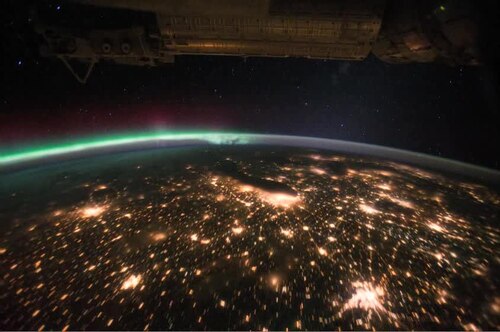 Aurora over Yellowstone
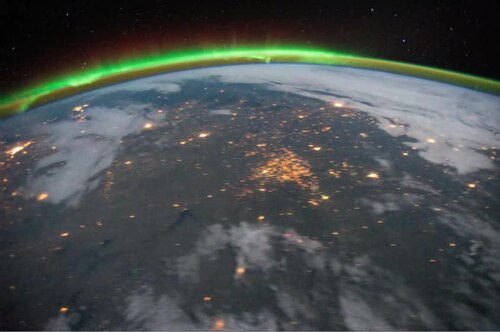 Aurora over Yellowstone
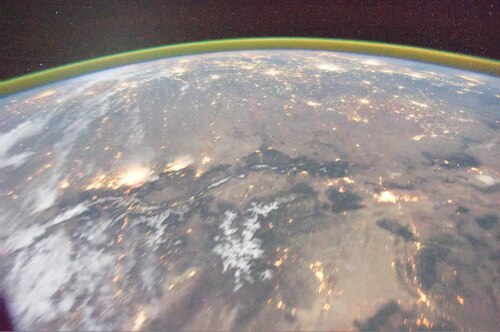 Aurora over Yellowstone
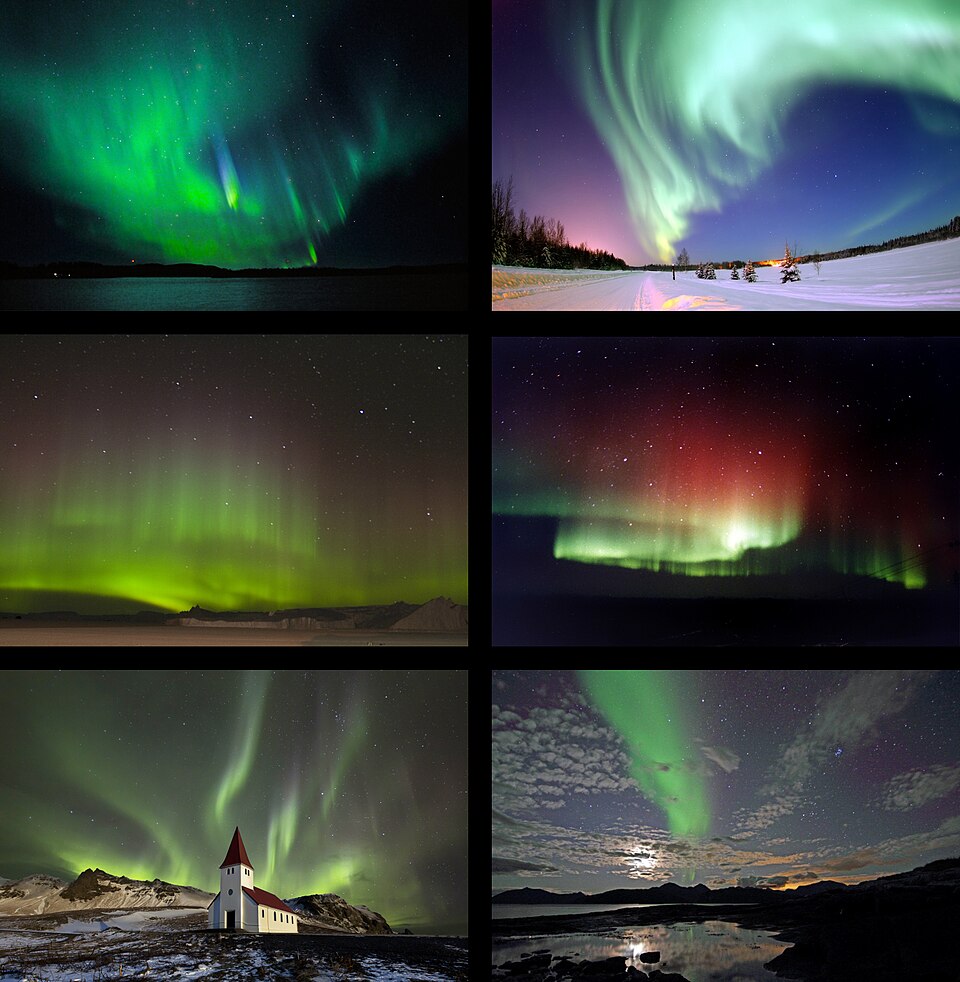 Aurora over Yellowstone
Planning your aurora trip
In-depth guides to help you plan a trip to see the northern lights.
 Travel GuideAll destinations
How to Plan a Northern Lights Trip
Destination, timing, accommodation, app setup, and how to read a space weather forecast.
 PlanningAll destinations
Best Time to See the Northern Lights
Every month ranked by real historical aurora-nights data, plus darkness windows and weather patterns.
 Travel GuideAll destinations
Northern Lights Bucket List
The experiences worth planning around - from Jökulsárlón to Svalbard polar night.