Northern lights in Oban tonight
Argyll, Scotland · 56° magnetic latitude · Kp 4 threshold
Kp 6 exceeds the visibility threshold for Oban. Head out if skies are clear and you have a dark site.
7-day outlook for Oban
Based on CME arrival predictions from NASA DONKI. Arrival times ±6 hours.
auroratonight.space
What Kp is needed here?
Oban sits at a magnetic latitude of approximately 56°N. The Kp index - a global measure of geomagnetic activity on a scale from 0 (quiet) to 9 (extreme storm), updated every 3 hours - needs to reach Kp 4 before the auroral oval expands far enough south to be visible from here.
At Kp 4, visibility is possible from Oban but skies need to be clear and dark. Cloud cover and light pollution remain the main obstacles even when Kp is high enough.
Best dark sky sites near Oban
Light pollution is the biggest obstacle after cloud cover. These sites give you the best dark northern horizon within reach.
McCaig's Tower and Pulpit Hill
Get directions ↗McCaig's Tower is the circular granite monument on the hill directly above Oban town centre, visible from much of the bay. The tower itself is unlit at night and the hill gives an open northern view across the Sound of Kerrera toward the Lynn of Lorn. Pulpit Hill, 200 m south of the tower on the same ridge, has marginally less sky glow from the town below and a slightly better arc to the north. Both positions are reached by footpath from Laurel Road; the walk takes 10 minutes on a steep but maintained path. Bortle Class 3 from both hilltop positions. The nearest significant light pollution to the north is the Connel area 5 km away.
Ganavan Sands
Get directions ↗Ganavan Sands is a beach 3 km north of Oban with a car park at the end of the Ganavan Road. The beach faces north across the Firth of Lorn toward the island of Lismore and the Lynn of Morvern. The bay is wide and the northern horizon extends without obstruction over the open water. Oban's lights are behind to the south, and the northern view is considerably darker than from the town. The car park is free and open throughout the night. Bortle Class 3 from the beach. On calm nights the Sound of Kerrera reflects the sky, though the reflection band is narrow due to the bay geometry. The beach is sandy with a level surface accessible from the car park in 50 m.
Loch Etive north shore
Get directions ↗Loch Etive is a 30 km sea loch running northeast from Connel through Glen Etive under the northern slopes of Cruachan. The north shore road from Taynuilt reaches the loch at Inverawe and then follows the water east to Inverliever and Bonawe. Beyond Bonawe, the road narrows to single-track and the loch is flanked by steep hillsides that create a narrow but open slot of northern sky. The Glen Etive road off the A82 near Glencoe gives access to the upper loch through completely uninhabited glen. Bortle Class 2 throughout from Taynuilt eastward. The drive from Oban takes 30 minutes via the A85; the upper loch is 45-60 minutes.
Best time to see the northern lights in Oban
Oban's aurora season runs from late September through to March, when nights are long enough for truly dark skies. The equinox months, September and March, bring a natural boost in geomagnetic activity, making them statistically the best of the season. Summer months bring too much twilight for aurora to be visible at this latitude.
Activity peaks around the September and March equinoxes, when Earth's magnetic field geometry is most favourable for coupling with the solar wind. Events during these two windows tend to produce the strongest displays of the year for observers at Oban's latitude.
April through August brings persistent astronomical twilight that washes out aurora completely. Even strong events (Kp 6+) remain invisible during this period because the sky never gets dark enough.
Up to 8 locations
How often does the aurora appear in Oban?
Average nights per month the Kp reached Oban's threshold of 4+, from 15 years of geomagnetic data (2010–2024).
Counts the Kp 4+ threshold only - cloud cover and local darkness are not included.
Kp data: GFZ German Research Centre for Geosciences, CC BY 4.0
Plan your trip to Oban
Best window
The February to April window averages 14 aurora nights - the strongest consecutive stretch of the year.
How long to stay
For your best chance in March, plan at least 9 nights.
Related pages
Northern Lights UK
UK-wide aurora forecast with Kp thresholds for all regions.
Read →Northern Lights Scotland Tonight
Scotland-wide aurora forecast.
Read →Northern Lights Fort William Tonight
Fort William - 40 km north on Loch Linnhe, same latitude, Glencoe access.
Read →Northern Lights Isle of Skye Tonight
Isle of Skye - 57°N, lower Kp threshold, Trotternish dark sky.
Read →Northern Lights Glasgow Tonight
Glasgow - 2 hours south, lower latitude but nearest major city.
Read →What Is the Kp Index?
How the Kp scale determines aurora visibility at your latitude.
Read →Aurora photographs from Oban
Real photos sourced from Wikimedia Commons.
 Aurora over Oban
 Aurora over Oban
 Aurora over Oban
 Aurora over Oban
 Aurora over Oban
 Aurora over Oban
Planning your aurora trip
In-depth guides to help you plan a trip to see the northern lights.
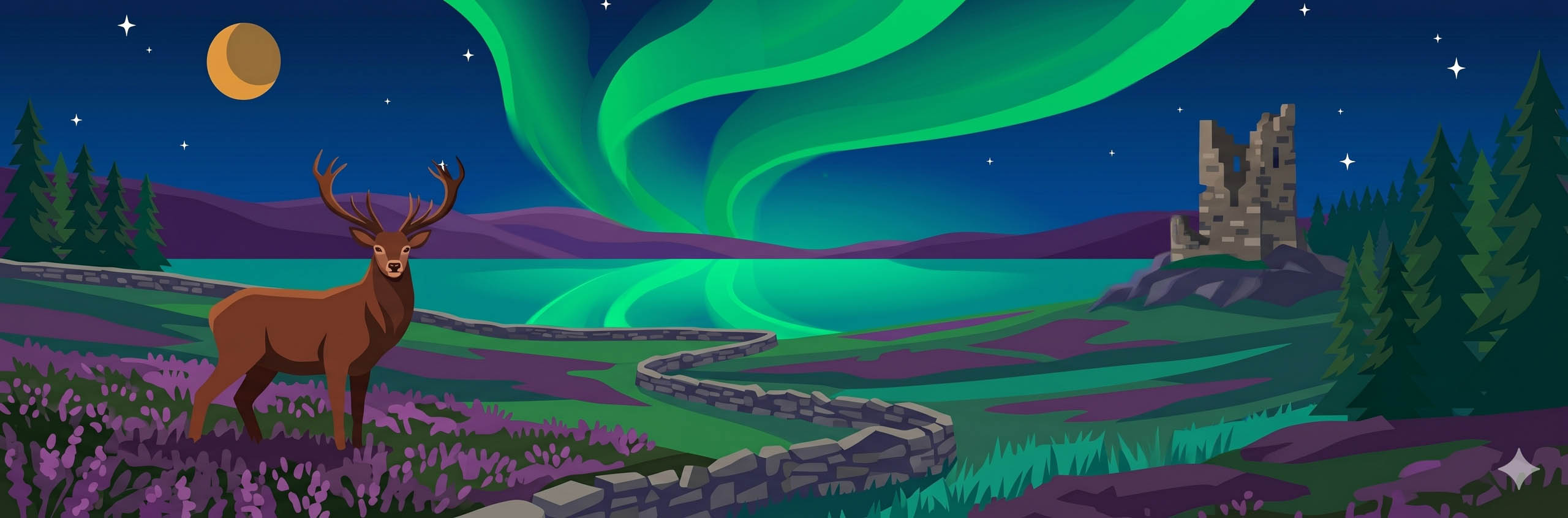 Travel GuideUK
Northern Lights Scotland - Complete Travel Guide
Shetland, Orkney, Highland coasts, and Galloway Forest - the UK's best aurora destinations.
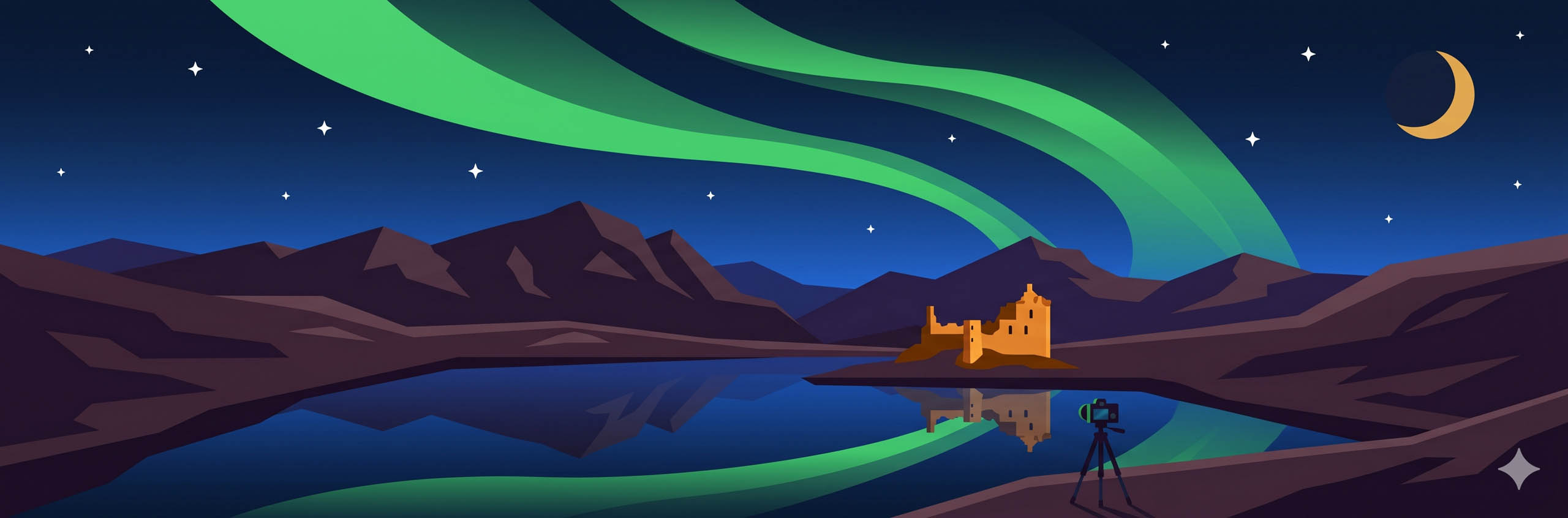 PhotographyUK
Northern Lights Scotland - Photography Guide
Dark sky locations, foregrounds, and the best conditions for aurora photography in Scotland.
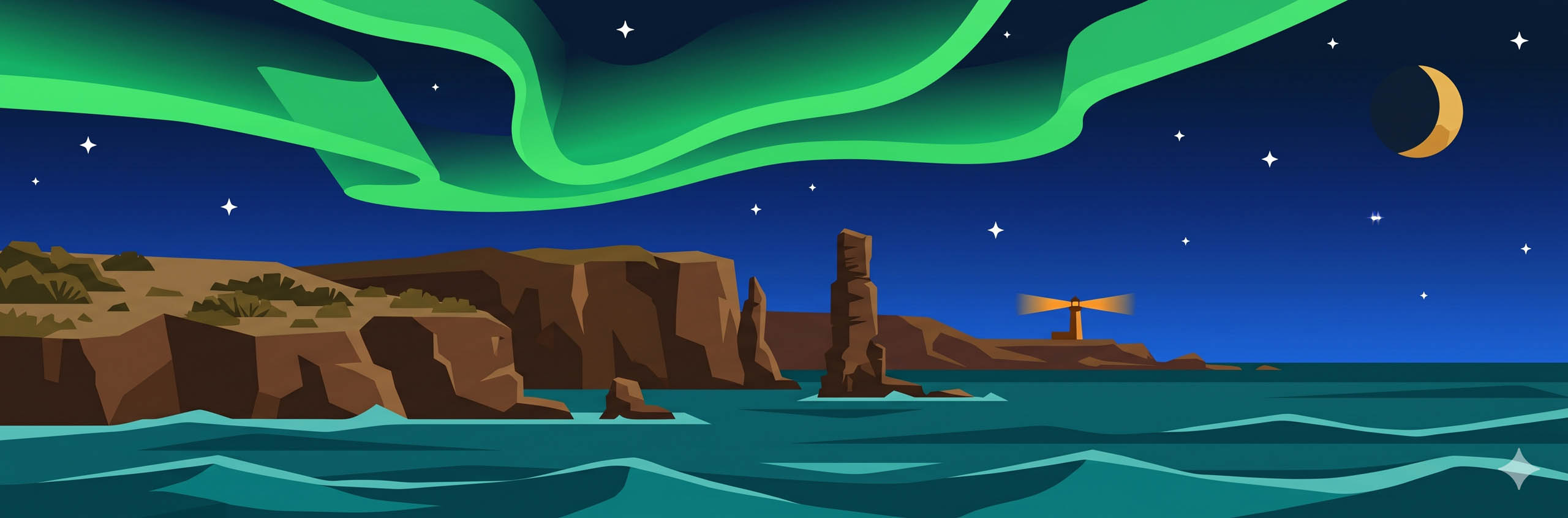 PhotographyUK
Scotland Aurora Photography Locations
Specific spots across the Highlands, Orkney, and Shetland rated for aurora photography.