Understanding aurora
Can you see the northern lights with the naked eye?
Yes, you can see aurora with the naked eye - but what you see depends on geomagnetic activity, how dark your sky is, and whether your eyes have adapted. This guide sets honest expectations for each Kp level.
The direct answer
At Kp 5+ from Scotland, Iceland, or Norway, aurora is visible to the naked eye on a clear night as a green arc or band on the northern horizon. At Kp 7+, it fills the sky and is unmistakeable.
At Kp 3-4 from those same latitudes, it is possible but may appear as only a faint brightening that many people mistake for distant light pollution. From mid-latitudes such as England, Germany, or the northern US, Kp 7+ is needed for confident naked eye visibility.
Dark adaptation: 20 minutes minimum
When you step outside from a lit room, your eyes use cone cells adapted for bright light. After 15-20 minutes in genuine darkness, rod cells take over and sensitivity to faint light increases by a factor of roughly 10,000.
Aurora that is invisible to just-arrived eyes can become clearly visible after proper dark adaptation. Avoid white-light phone screens during this period. Use red light if you need to see anything - a red torch or your phone's red-light mode will not reset your adaptation the way a standard white screen will.
How light pollution affects visibility
A Bortle Class 5 suburban sky raises the background brightness of the horizon and washes out faint aurora. Faint auroral arcs visible from Bortle 2 conditions may be completely lost from a town centre.
Rule of thumb: if you cannot clearly see the Milky Way on a clear moonless night, light pollution will mask a Kp 3-4 aurora. At Kp 7+, aurora outcompetes most light pollution and will be visible even from suburban locations with a reasonably clear northern horizon.
What to expect at each Kp level
These descriptions apply from Scotland, Iceland, or Norway under Bortle 2 conditions with full dark adaptation. Mid-latitude observers will need one or two Kp steps higher to see equivalent activity.
Kp 2-3
Faint green arc or diffuse glow on the northern horizon. May appear white or grey to dark-adapted eyes. Clearly visible on a camera in a 10-second exposure. Easy to mistake for distant light pollution on a first sighting.
Kp 4-5
Clear green band 10-20 degrees above the horizon. Colour visible to the naked eye. May show subtle movement. Clearly recognisable even to first-time viewers with 20+ minutes of dark adaptation.
Kp 6-7
Bright green arcs with visible structure. Rays, bands, and curtains present. Colour unmistakeable. May fill 30-50 degrees of sky. Faint red tint possible at the top of the display.
Kp 8-9 (G4-G5)
Overhead display. Full sky coverage. Green, red, and pink visible to the naked eye. Movement is rapid and can cover large areas of sky in seconds. One of the most visually arresting natural events visible at any latitude.
Camera vs naked eye
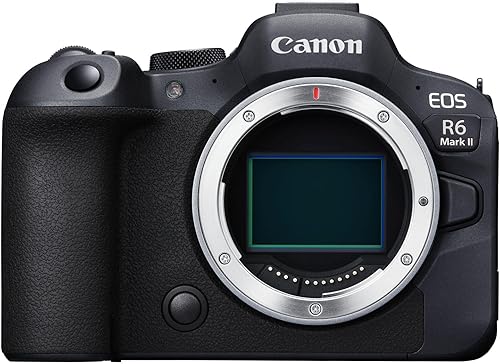
Long-exposure photographs collect light continuously across the visible spectrum. A 10-second exposure at ISO 3200 will show aurora that the naked eye cannot detect at all. This means aurora photographs often look more impressive than the live view - particularly for red aurora, which the dark-adapted eye struggles to register.
If you take a test shot and see green on the northern horizon, aurora is present even if you cannot clearly see it. This is the most reliable way to check at low Kp levels. Do not judge a night as a failure based solely on what your eyes tell you in the first 20 minutes.
Related pages
What Is the Kp Index?
How Kp levels map to aurora brightness and visibility latitude.
Aurora Photography Settings
Camera settings to capture what the naked eye misses.
Northern Lights Viewing Tips
Dark sky locations, eye adaptation, and how to prepare.
Aurora Colors Explained
Why aurora appears green, red, and purple at different activity levels.
Common questions
Questions about naked eye aurora visibility, camera detection, and what conditions you actually need.
I took a photo and it showed aurora but I couldn't see it. Is that normal?
How dark does it need to be?
Do I need special equipment?
Can you see aurora during a full moon?
Is green the only colour you can see?

Sean Barraclough
Creator of Aurora Tonight